 EN
EN
 ES
ES

A Biographical Sketch of Francisco Eppens Helguera
In January of 1914, Mercedes Helguera Ceballos moved with her husband, Francisco Eppens Campillo, and one-year-old son, Francisco Eppens Helguera, to Mexico City to seek a cure for the husband’s advanced tuberculosis. Her husband’s death later that same year meant that Mercedes Helguera and her son struggled financially, since due to the 1910 Mexican Revolution the family had lost their means of livelihood in San Luis Potosí, a hardware store called La Palma that had belonged to Francisco Eppens C. and his father. In Mexico City they lived on Puebla Street in the Colonia Roma. Francisco completed 4th to 6th grades of elementary school at the Horacio Mann School and the Benito Juarez School, and in 1927 he entered art school at the San Carlos Academy.
According to a curious family anecdote, when Mercedes Helguera Ceballos arrived in Mexico City with her husband and son, she rented a house in Tlalpan that belonged to Blanca Segovia de Velásquez, the aunt of María Lascurain Segovia, who would later become Francisco´s wife. Mercedes also met María’s mother, Luz Segovia de Lascurain, who welcomed her with encouragement, remarking that her cute young son Francisco would surely be a big help to her in the future. Little did she know that the darling little boy would later become her son-in-law!
As a young man Eppens worked to help his mother pay the bills. From 1929 to 1935, he did promotional drawings for the Ericsson Company, the Modelo Beer Company, Goodrich Euzkadi and the Toltec Cement Company at the request of the company director, Federico Sánchez Fogarty. He also did drawings for Lux magazine, which was owned by the workers´ union of the Mexico City´s Light and Power Company, and for Más Caminos magazine. After this work in publicity, he joined the cinematography studios where for three years he performed various jobs including set design and illustration of titles and posters. He collaborated with “El Gallo” Sainz of Sicily and with Antonio Moreno for movies such as “The Scandel,” and he also participated with Chano Urueta working on the movie “A Woman for Sale.” Eppens worked for Emilio “The Indian” Fernández in the National Film Company where he created props and illustrated posters, among other things.
In 1929, after completing his studies at San Carlos, a friend of Eppen´s mother, architect Roberto Álvarez Espinosa, hired Eppens to work in the Office of Construction of the Ministry of Comunications and Public Works, housed at that time in what is now the National Art Museum on Tacuba Street in Mexico City´s historic center. While working there, Eppens met Justino Fernández and architects Enrique de la Mora and Enrique Yánez. Eppens wanted to study architecture at this time, but he put his interest aside since he needed to earn money to help cover family expenses. At this time his mother was working at the Technical Industrial Institute (which later became the National Polytechnical Institute) as an English teacher where her brother-in-law, Wilfrido Massieu, was one of the founders.
In 1930, commissioned by architect Roberto Álvarez Epinosa, Francisco painted two murals at the Club Colonia, where people gathered to bowl and play billiards. This marked the beginning of his career as a muralist. Years later, on Tuesday evenings at his house in the Colonia del Valle in Mexico City, Eppens hosted afternoon gatherings attended by such culturally prominent personages as Mexico City chronicler Artemio de Valle Arizpe, painter Dr. Atl, poet and writer Salvador Novo, poet Enrique González Martínez, art historian and art critic Justino Fernández, architect Enrique de la Mora y Palomar and Federico Sánchez Fogarty.
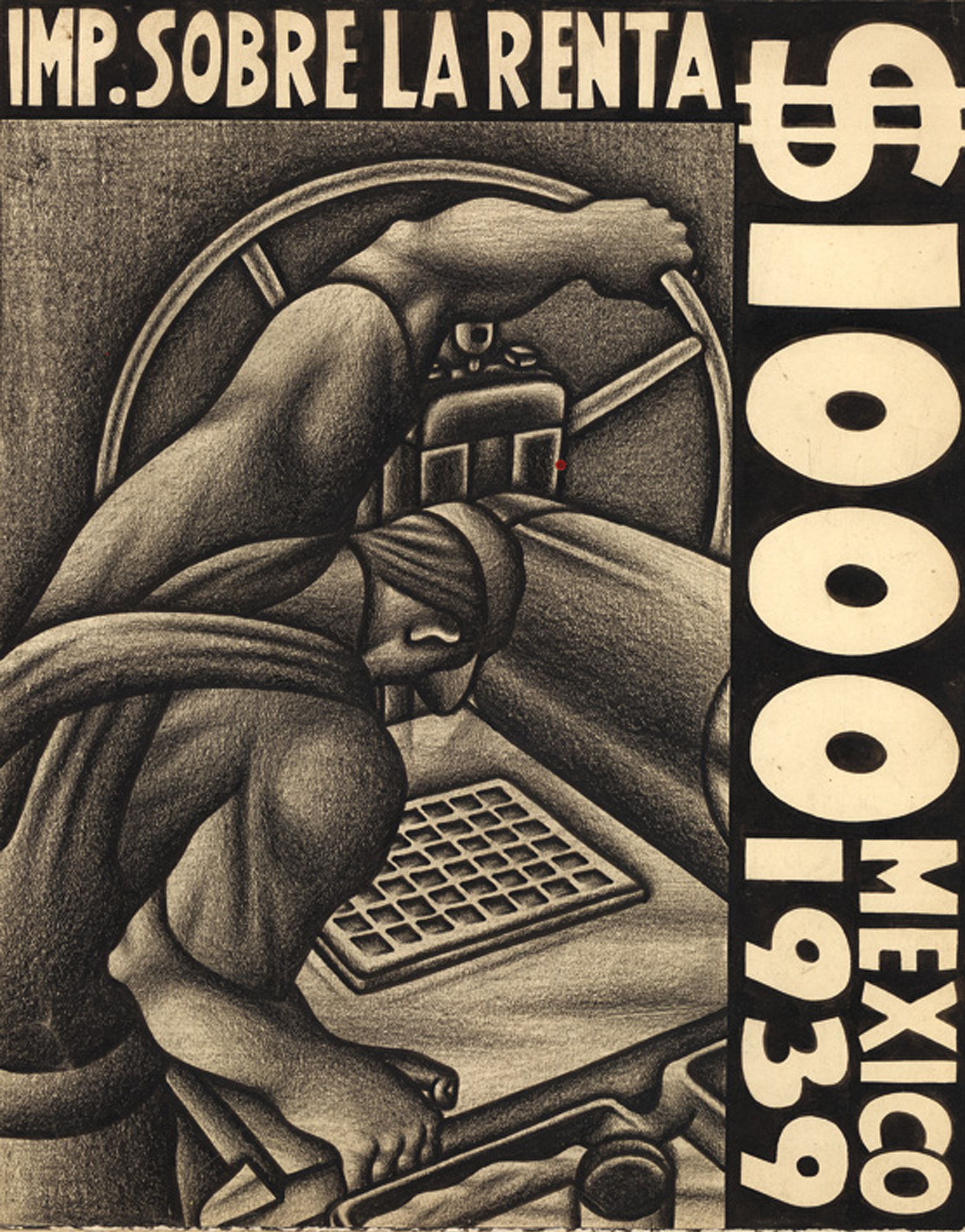
In 1935, Eppens was offered a job by his friend, Carlos Vallejo Márquez, director of the Office of Printing of Stamps and Securities (the TIEV or Talleres de Impresión de Estampillas) which was under the Ministry of the Treasury. At first Eppens designed revenue stamps and then later, commemorative postage stamps. Eppens produced the designs which were then engraved for printing the stamps. Eppens worked full-time at the TIEV until 1951. After that he continued to design both postage and fiscal stamps at home in his private studio. From there he sent the designs to the TIEV where they were used to produce stamps.
In 1935, Francisco Eppens bought a used Ford car which had been crashed. He designed an aerodynamic body for it, unusual for those times, with a low door like some modern sports cars that can only be entered by bending over. This unusual car even appeared in a Mexican film.
My father was a very sensitive person and great admirer of Beethoven; I remember that he wept when he heard a classical music piece that he especially liked. He was a calm, peaceful person who never bragged about his accomplishments, but was modest to the point that he undervalued the quality of his art work.
During the time he worked at the TIEV, which was located in the National Palace in downtown Mexico City, Eppens also completed a number of other projects including the following:
- In 1939, he painted “The Miners”, two murals al fresco in the Hotel Fundición in Zimapán, Hidalgo.
- In 1941, he completed “Culture”, a mural for the Sayrols Publishing Company in Mexico City.
- In 1942, he painted “El Trabajo,” an al fresco mural for the Helguera Brothers Company, and “Fray Bartolomé de las Casas”, an al fresco mural in the Art Chapel of the Rancho del Artista.
- In 1943, he produced “Sor Juana Inés de la Cruz”, a fresco mural also for the Rancho del Artista Art Chapel.
- In 1950, he finished the following murals, painted with piroxilina (an industrial paint used for automobiles) and fibracel (compressed wood shavings) for the Children´s Hospital in Mexico City: “Protection for the Child”, “Medical Science against Sickness and Death”, “Battle against Tuberculosis”, “The Beginning of Life” and the “Effort of Medical Science in Defense of Childhood”.
- And in 1951, he painted two more murals, “Malnutrition” and “Nutrition,” also at the Children’s Hospital in Mexico City.
In 1953, two years after leaving his job designing Mexican stamps, Francisco Eppens made an unusual glass mosaic mural titled “The Four Elements” at the Faculty of Medicine on the campus of the National University of Mexico (UNAM). Because of its location and dimensions (20 x 18 meters = 360 square meters), this mural is one of Eppens’s most important works of art. A year later, he painted “The Prevalence of Man” at the Faculty of Dentistry on the campus of the National University of Mexico (UNAM).
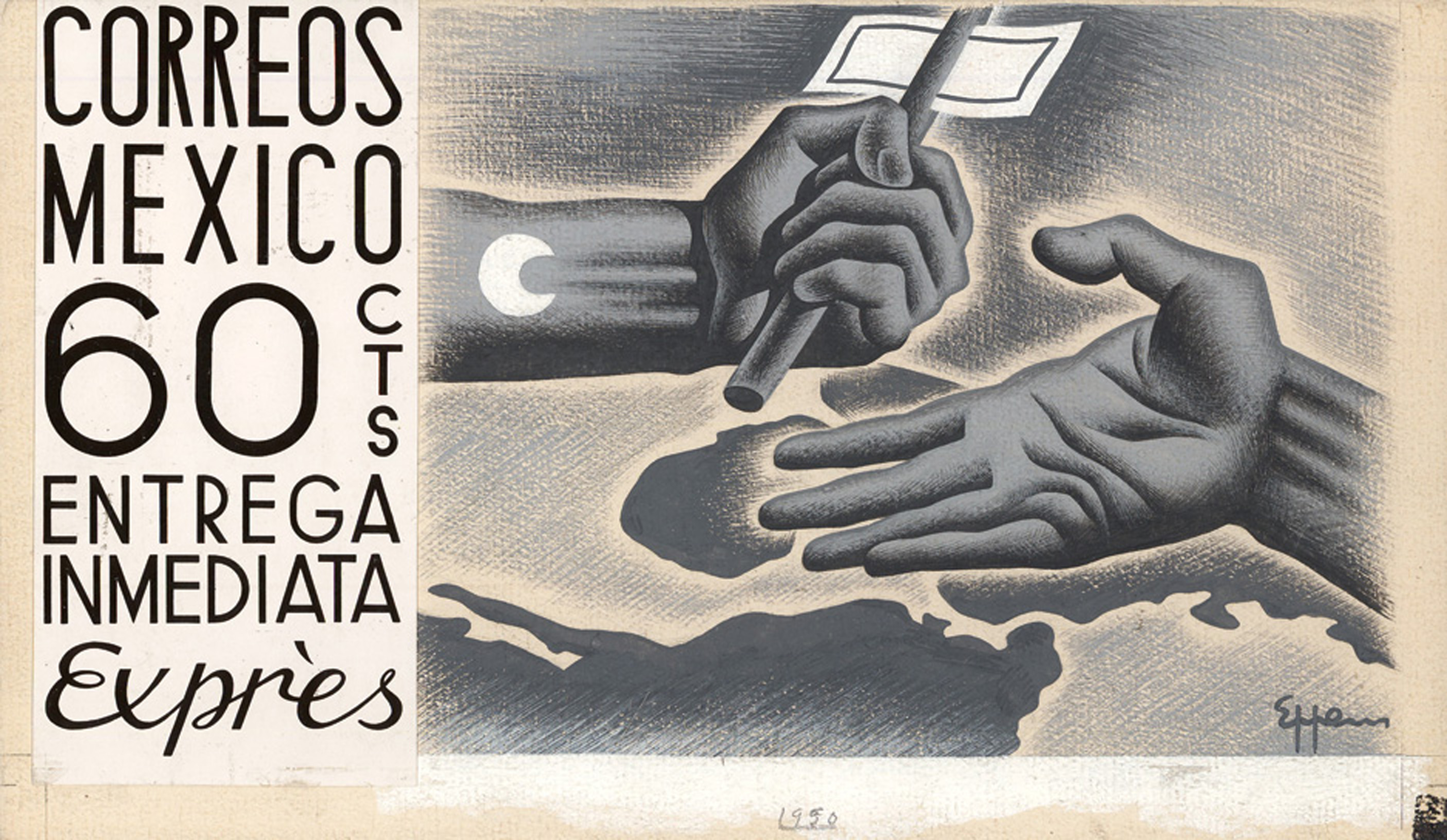
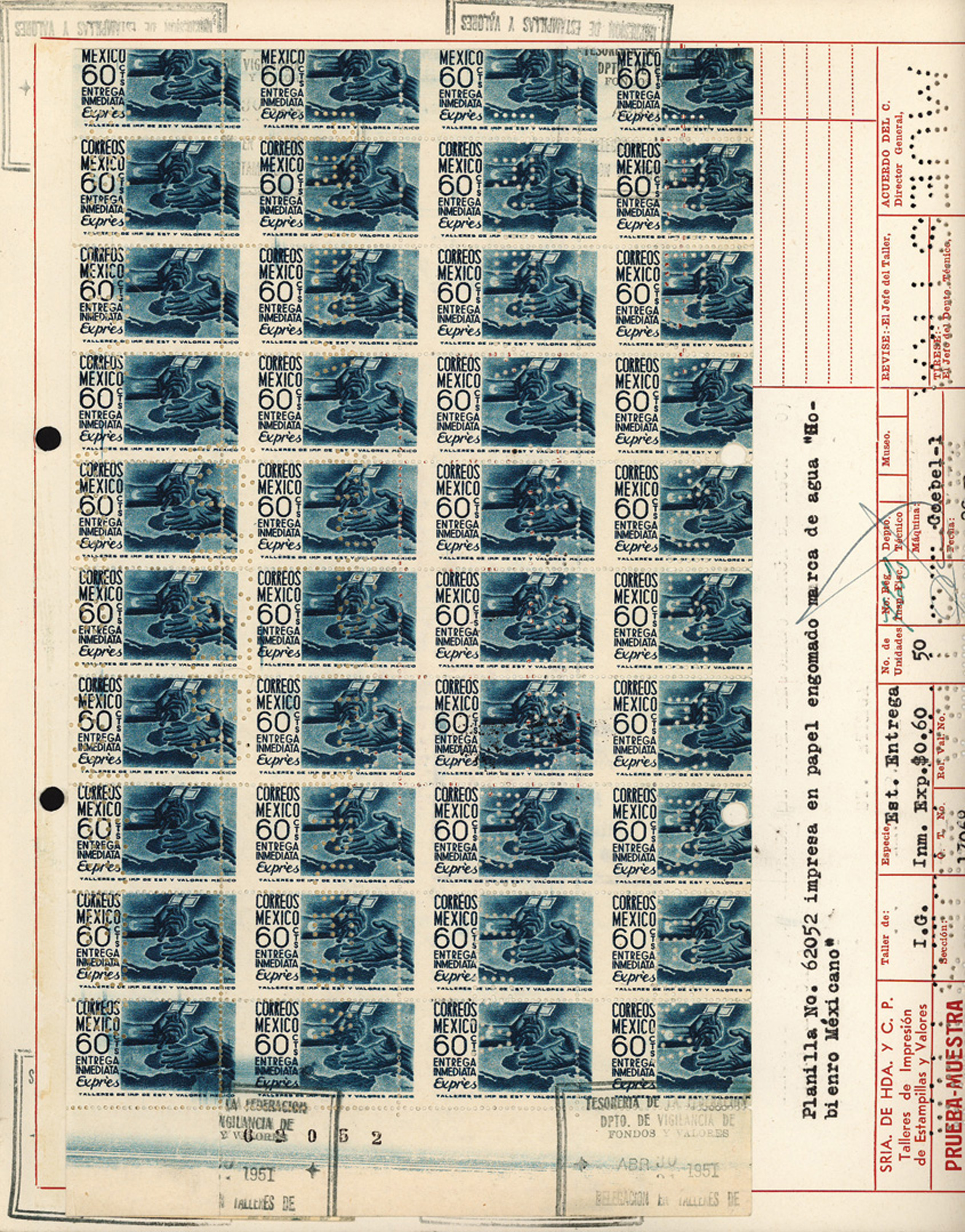
60 centavo dark blue green. Scott catalog number E10
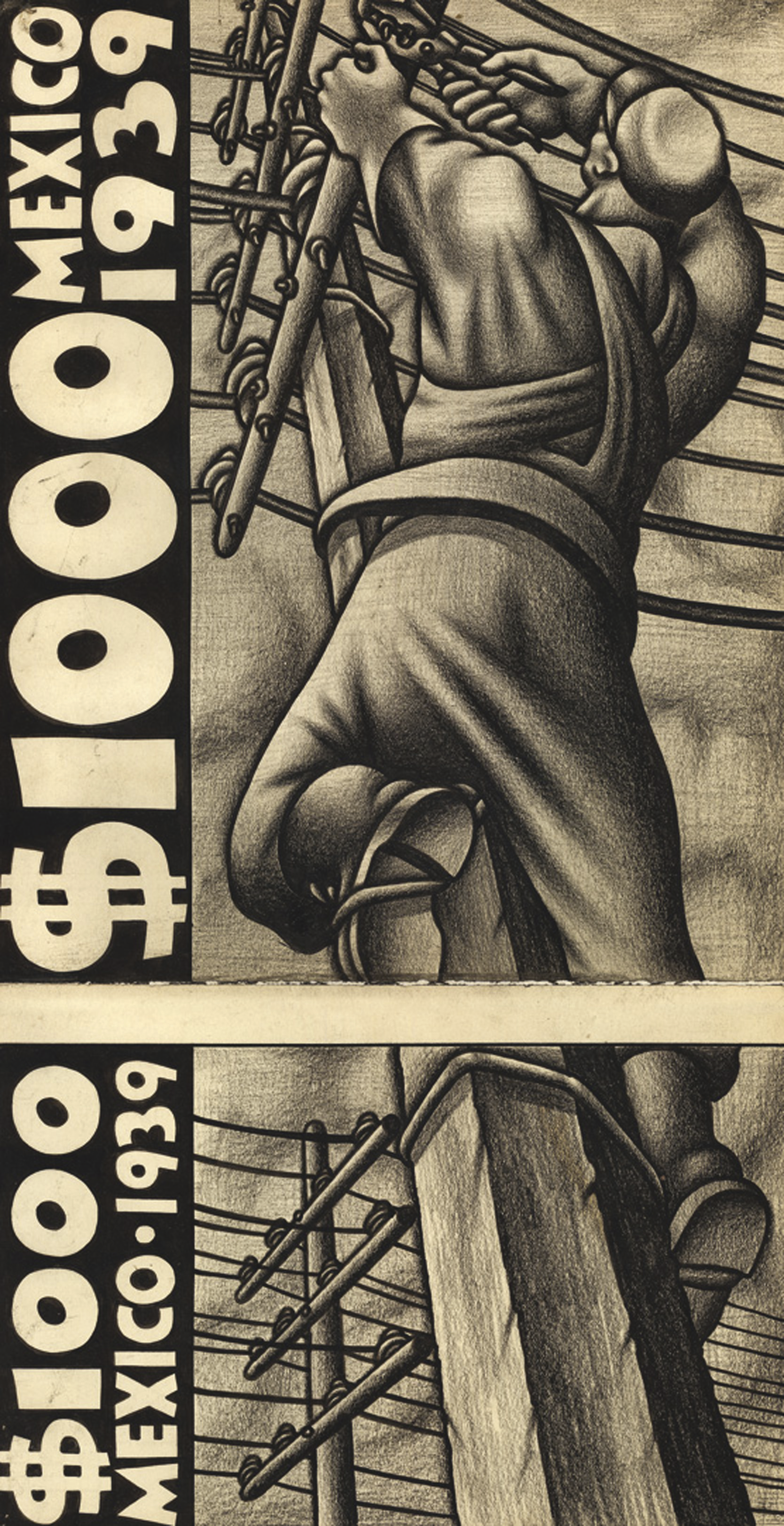
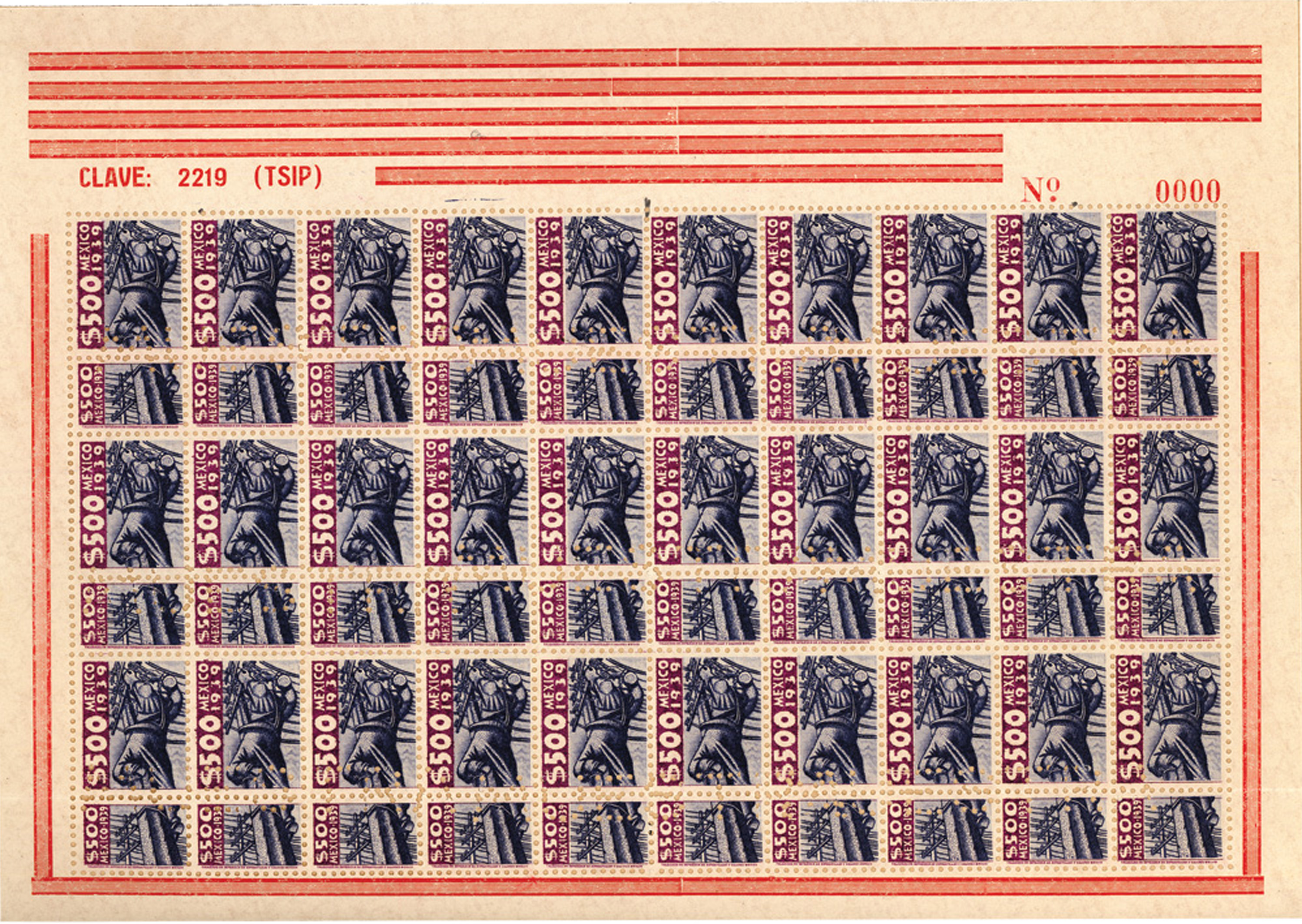
500 peso value purple and violet. Stevens catalog number R729.
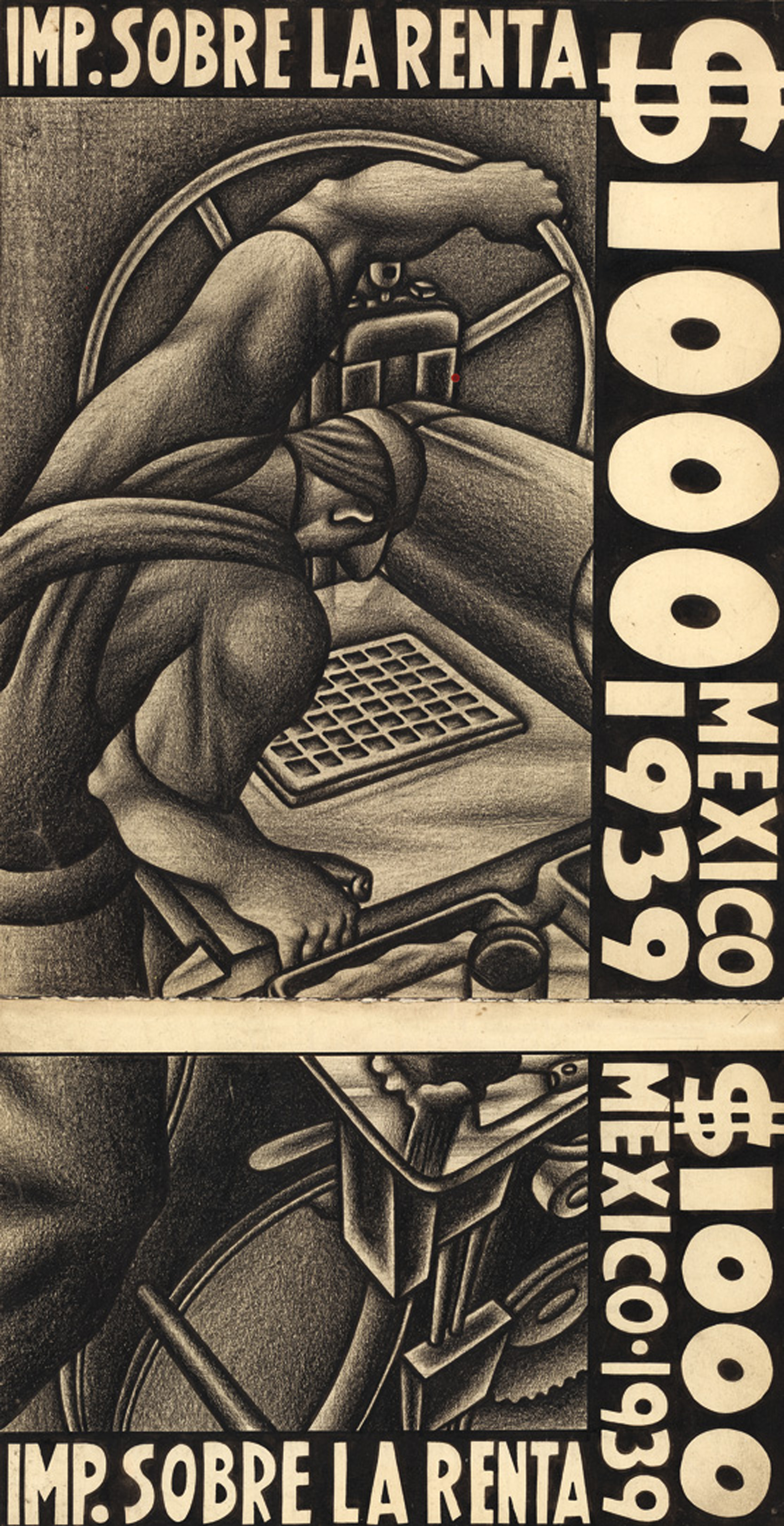
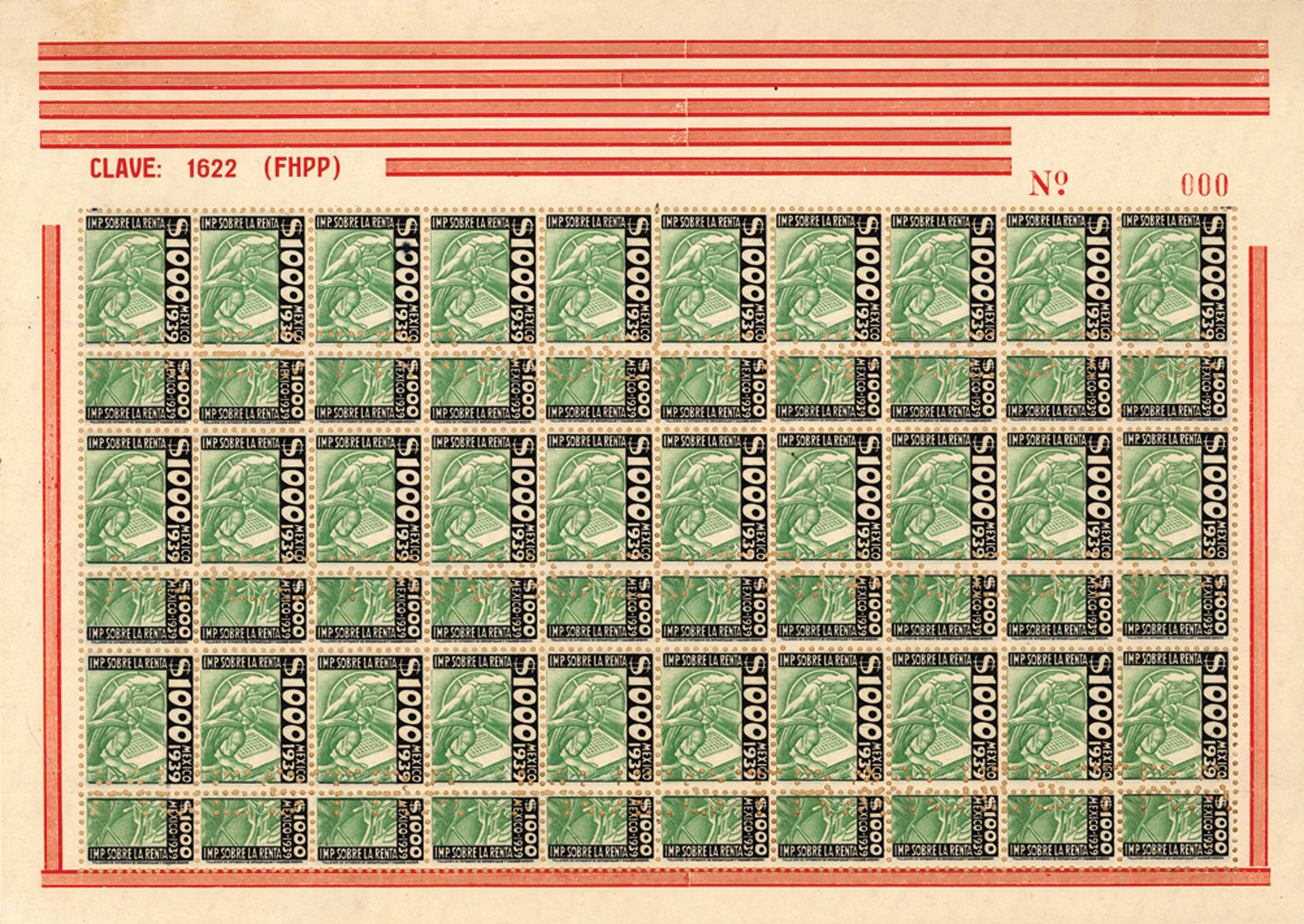
1000 peso value green and black. Stevens catalog number IS156.
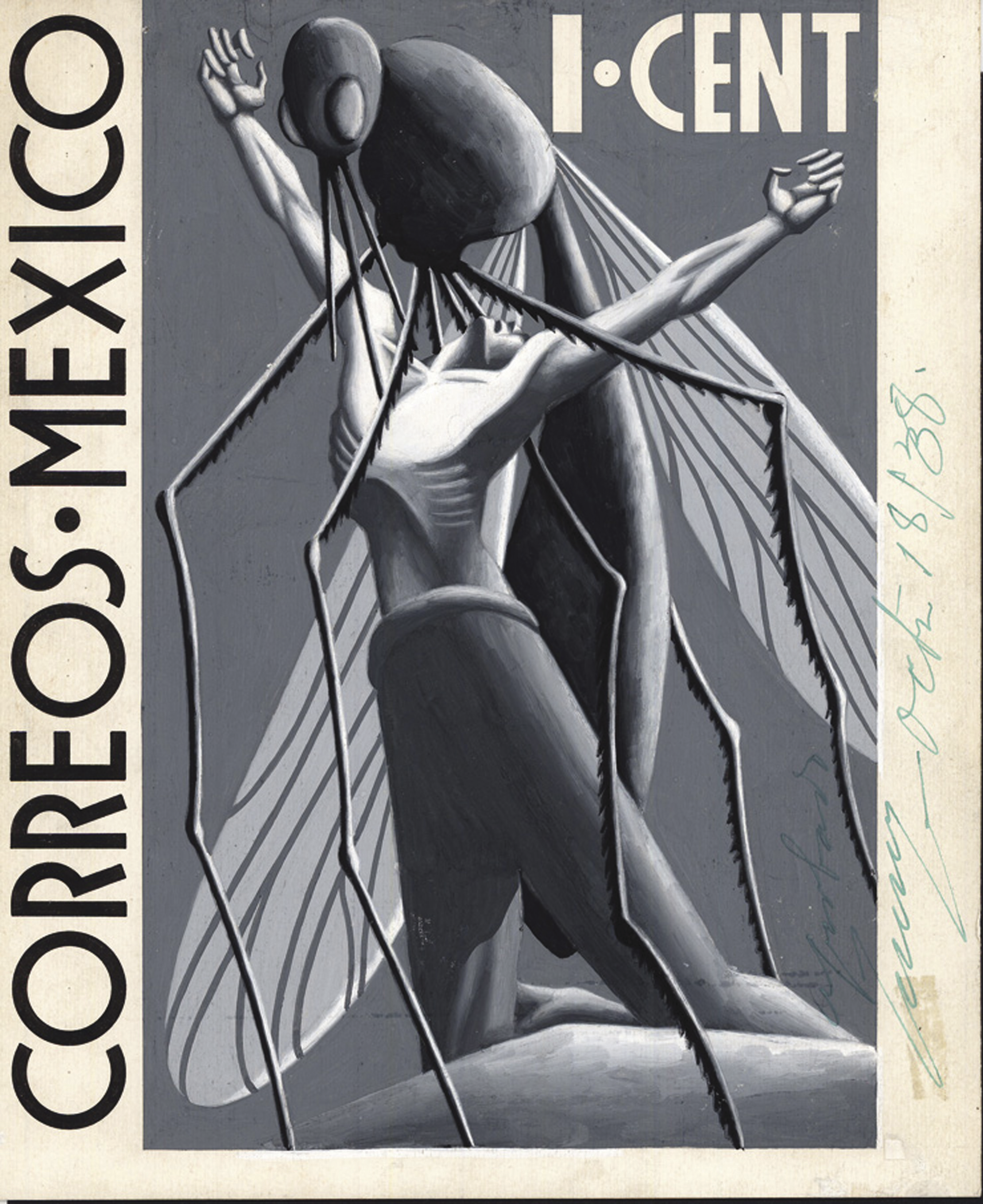
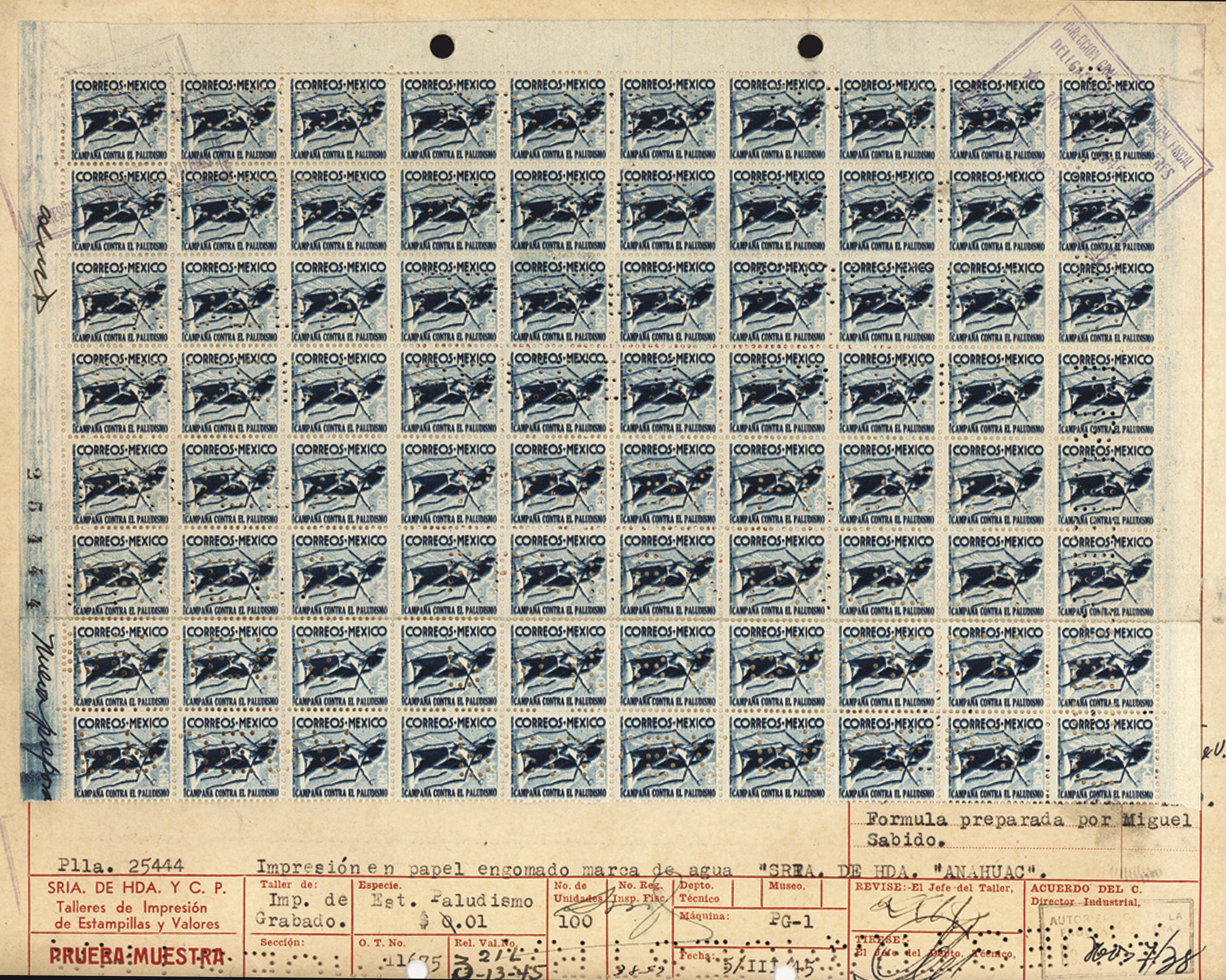
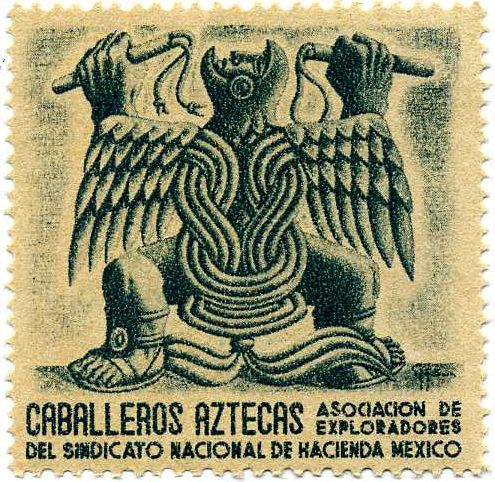
by Eppens for an explorers club (a boy-scout group?)
affiliated with Hacienda. The stamp was probably printed
at the TIEV.
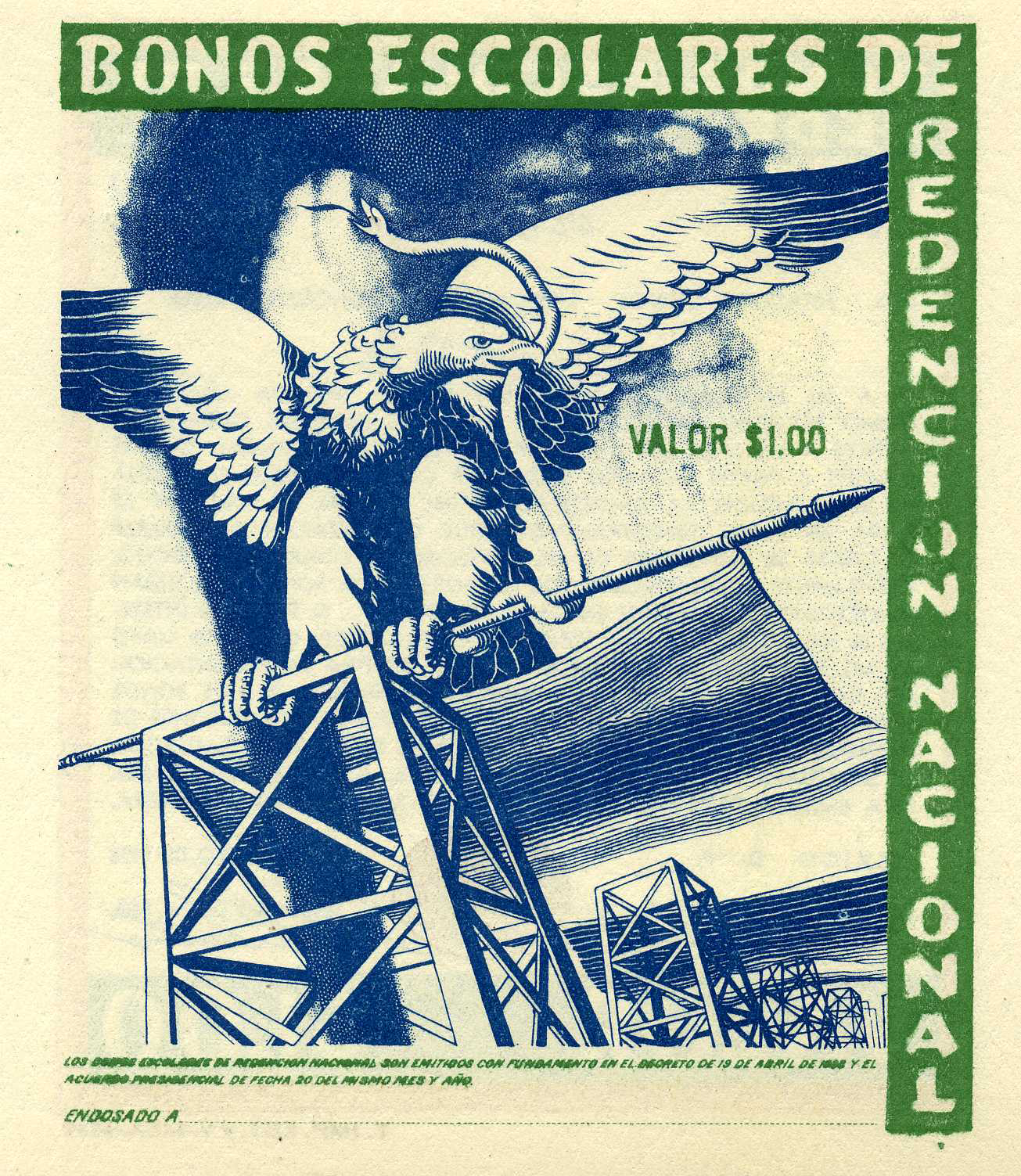
in 1938 by the TIEV to support students.
There is no signature on the design.

 Facebook