 EN
EN
 ES
ES

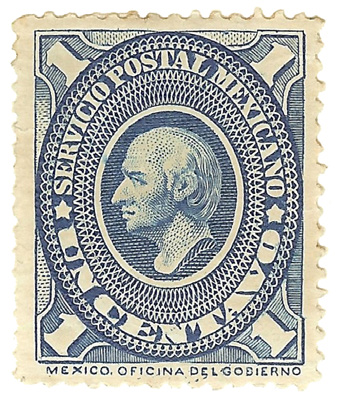
A Beginner’s Guide to the Hidalgo Medallions of México 1884-1895
This article was originally published in The London Philatelist, volume 129 pages 561-575, December 2020, and also in MEPSI's journal, Mexicana, in April 2023.
Although the Hidalgo Medallions is a key and pivotal issue in the intersection of the classic and the modern stamp eras of México, very little has been
published about it so far. This article attempts to provide an overview for those who want to learn the basics of this issue and get a sense of what is rare. It is
illustrated with examples of some important stamps and covers. Some of the illustrations come from the collection of the late Chicago stamp collector Jay Bard.
He assembled the most complete collection ever of this issue over 60 years.
On January 1, 1884, the Hidalgo Medallions issue was launched after México joined the UPU. As it is pointed out by Richard Daffner in his 1990 Mexicana article
(Daffner), this issue was designed to simplify the postal system by using one issue for all mail instead of the simultaneous use of the 1874 issue for domestic mail
and the Juarez issue for foreign mail. The Hidalgo Medallions were the first issues to replace the old system of district overprints used from the introduction of
stamps in 1856. In the old system stamps needed to be validated with the local application of a district overprint by the postal districts on receipt of the stamps.
This prevented stamps sent from the central post office and stolen by bandits to be used. Without the overprint the stamps had no postal validity.
The Three Issues of the Hidalgo Medallions
The issue can be divided in three: 1884, 1885 and 1892:
1) The 1884 Green Issue.
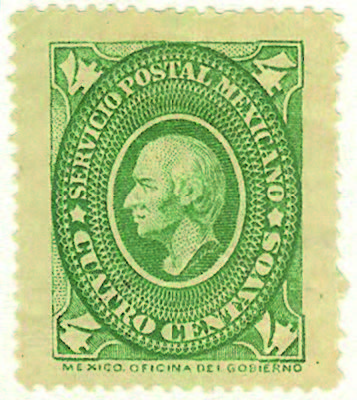
All centavo denominations were printed in green on unwatermarked paper (Figure 1) and included 1c, 2c, 3c, 4c, 5c, 6c,10c, 20c
and 50c. The peso denominations were issued in blue: $1, $2, $5 and $10. This color scheme was very
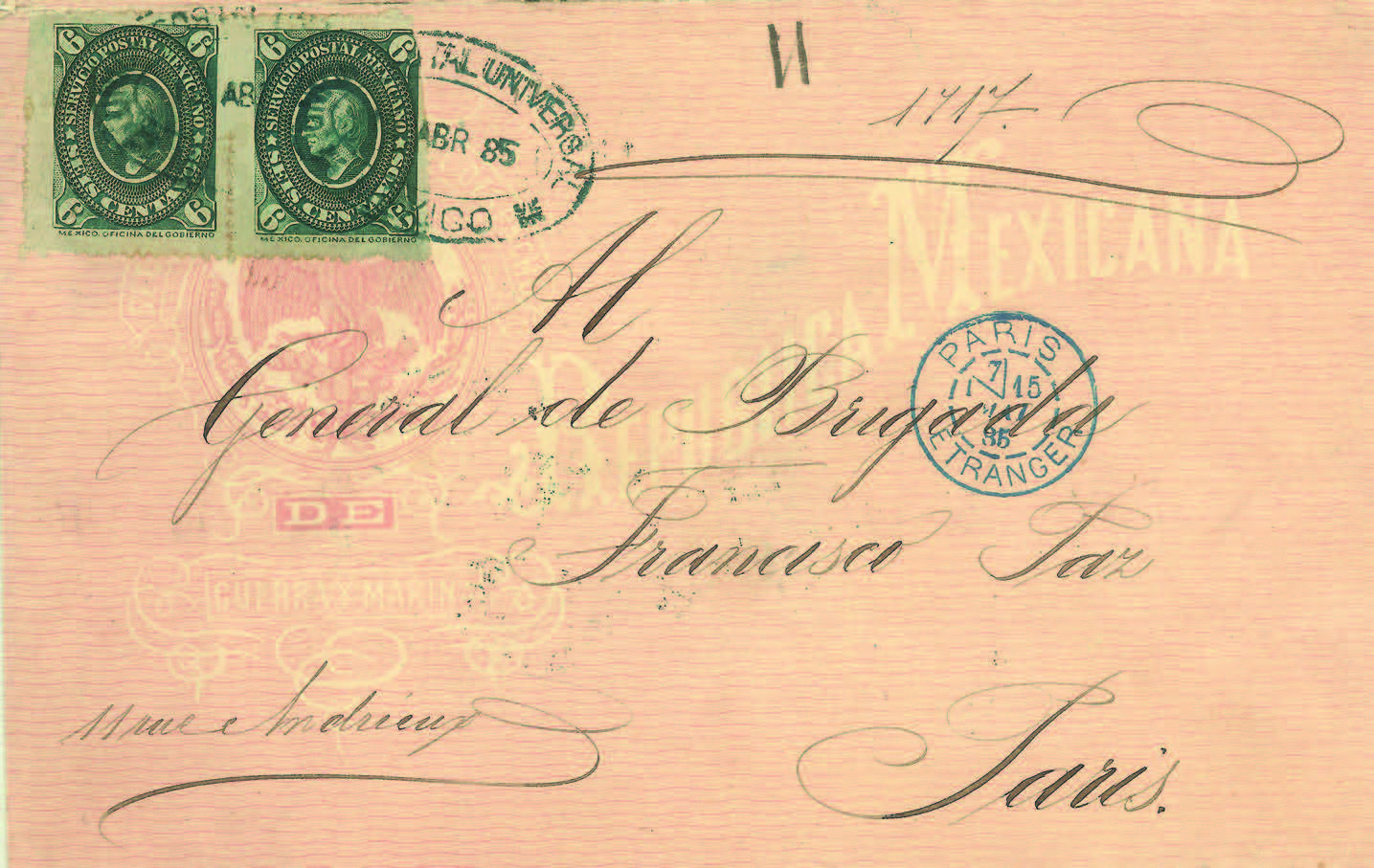
confusing for the users and did not comply with the UPU color rules. There were several shades of green. The scarcest is
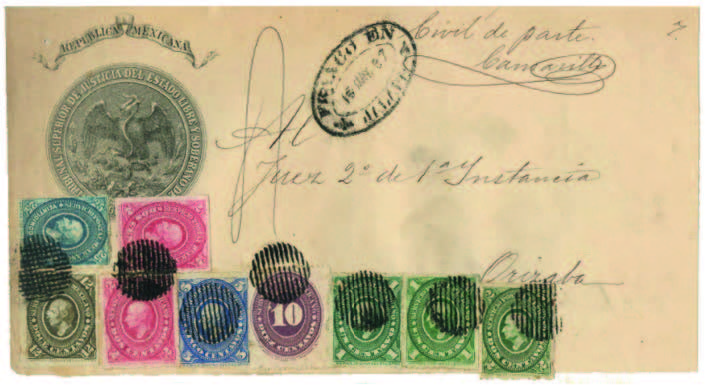
black-green which is seldom found on cover, let alone on an official one (Figure 2).
2) The 1885 Changed Colors Issue.
On July 1, 1885, all the centavo denominations were printed in color ink to comply with UPU rules and on unwatermarked paper: lc pale green, 2c carmine, 3c orange-brown, 4c red-orange, 5c ultramarine, 6c dark brown, 10c orange, 12c olive-brown and 25c bluegreen (Figure 3). This issue is far scarcer than the green because there were large stocks of the green at the time of the issue of the changed colors stamps.

3) The 1892 Blue-Green $5 and $10 Pesos.
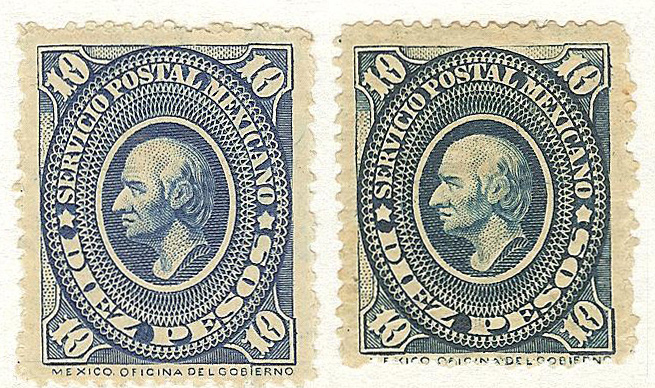
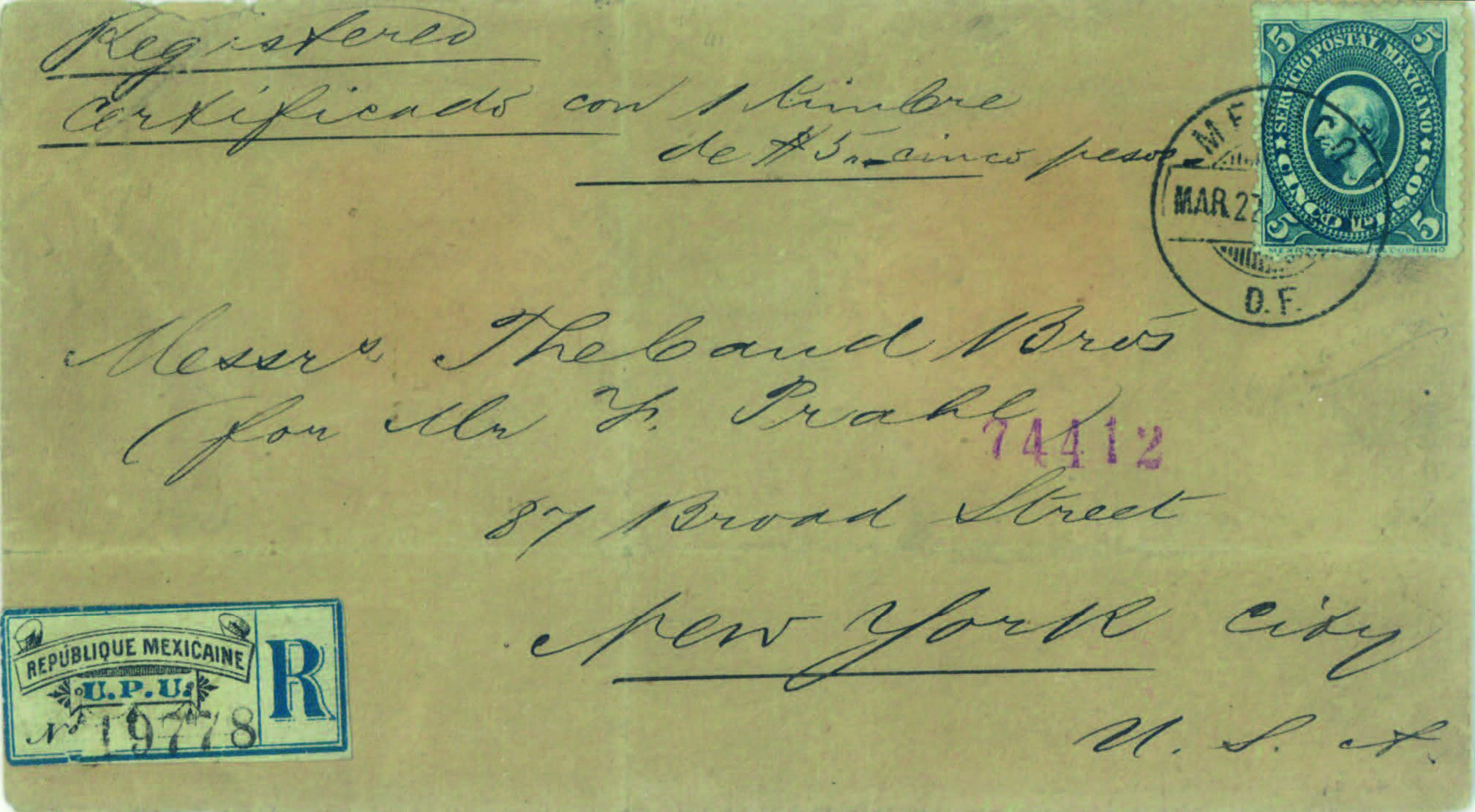
The only cover known is a philatelic usage to New York with the $5.) It is most likely unique (Figure 5).
Curiously, the $5 and $10 red Large Numerals were printed concurrently, but in larger numbers as they were the newer issue. Why they printed both issues rather than just the Large Numerals is anyone’s guess. Carl LeMar John (1987) found a contemporary reference that explains there was a communication error when giving the instructions to the printers. The initial run was of the red Large Numerals, and then the bluegreen Medallions were printed, probably to complete the order.
The focus of this article is on postage stamps and related covers only. For the sake of completeness postal cards rates are included in this article. It should also be mentioned that green and changed colors were also issued in postal cards, postal stationery and imprints on Wells Fargo covers. This surely deserves a separate article by the specialists.
Simultaneous Use of the Large Numerals and Hidalgo Medallions
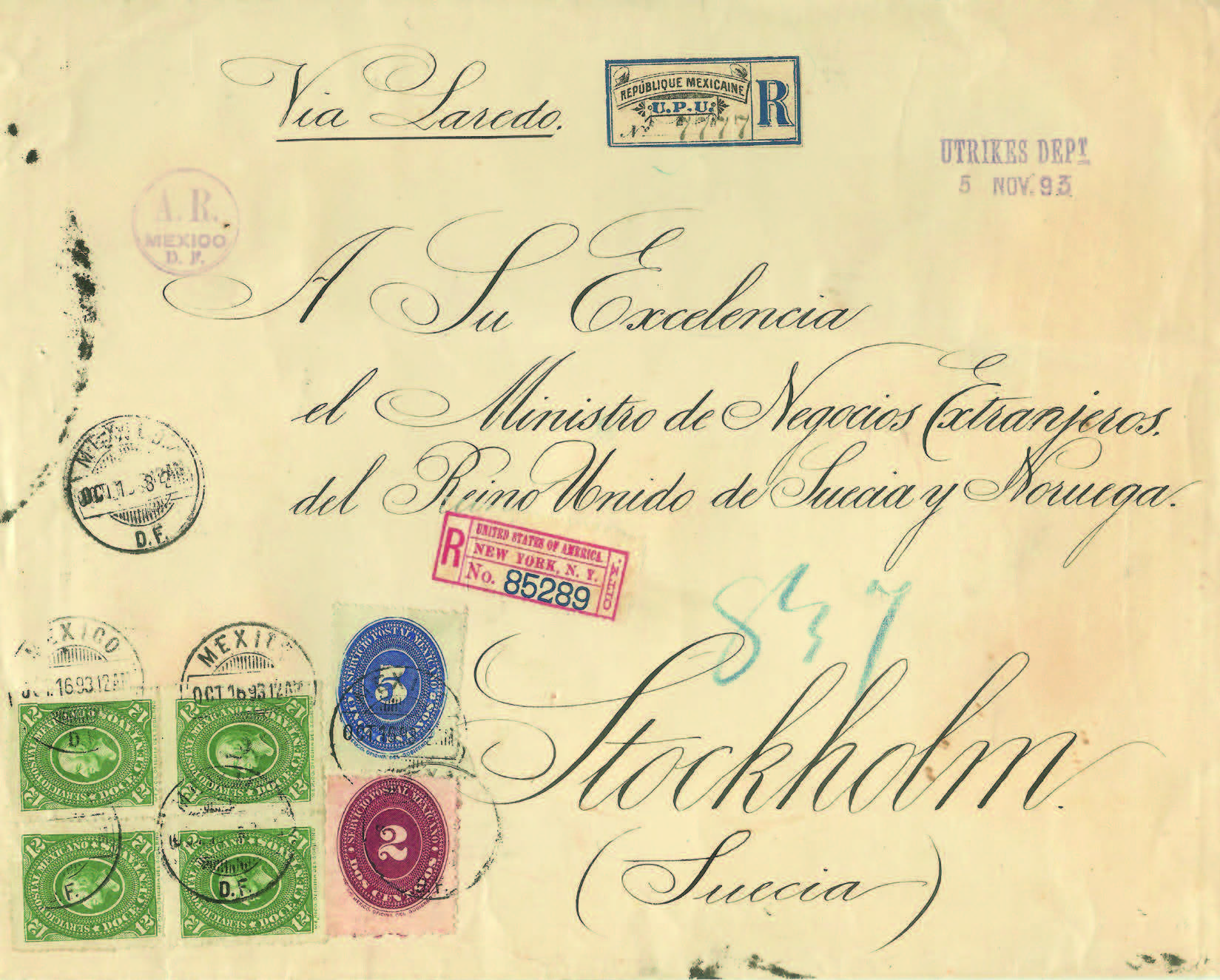
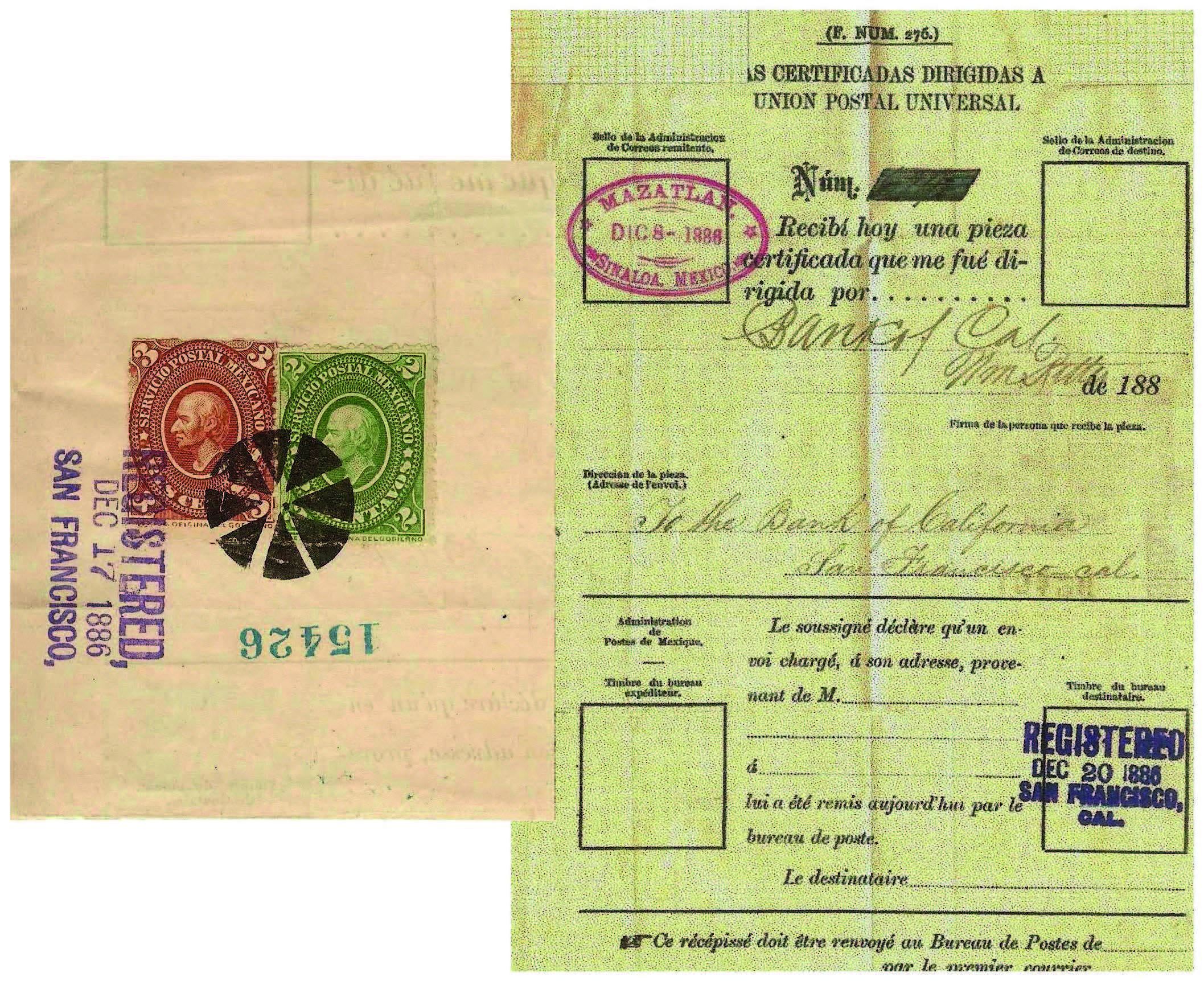
In 1886 a new issue called Large Numerals was printed with the intention of phasing out the Hidalgo Medallions. For the first time in Mexico, stamps from the previous issue were not demonetized, probably because there were large inventories of Medallions. So, both issues were simultaneously valid until all Medallions stock ran out or were demonetized by the Mulitas Issue in April 2, 1895. This created some outstanding mixed usages which are not commonly found (Figures 6, 7, 15, 16, 18, 19 and 21).
Design, Proofs and Production
Medallions were designed and printed locally at the government printing office in México City. Both Green and Changed Colors issues used the same plates.
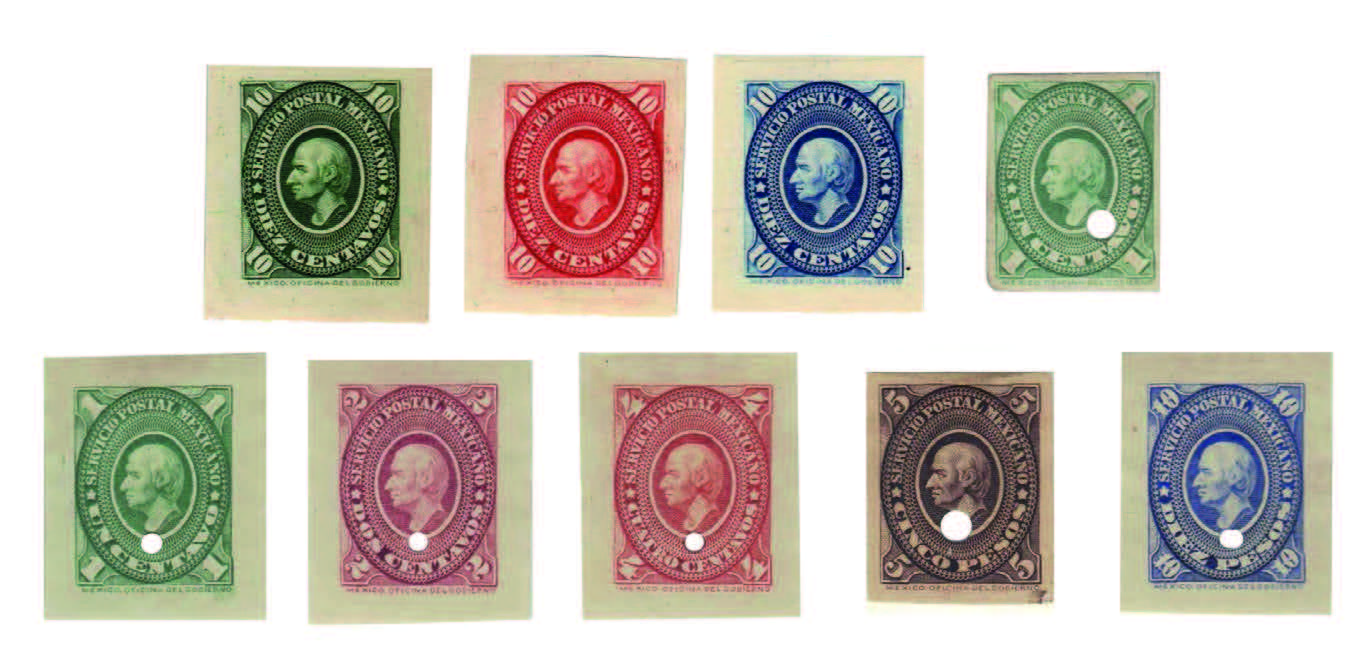
All proofs are scarce and are mostly printed on India paper. A least three colors are known of the 10c (green, red, blue) and a few in other values (Figure 8). Sample stamps in the issued colors exist with COLECCION” overprint. The hypothesis is that they were made either for the post office collection or as samples given to high authorities. They exist in all the Green denominations (in black), the peso values (in blue) and most of the Changed Colors denominations (in black). However, not many of each are known.
The 1884 and 1885 stamps were printed in sheets with 150 subjects. Whole sheets are very rare but at least one of 50c green and two of the $2 (with remainder cancel) are known. Since experts believe only 100-200 of the 1892 blue-greens were issued, these were probably printed in sheets of 100. If so, the old plate had to be adapted for a shorter printing. One wonders if the $5 and $10 blue plates also had only 100 stamps, instead of 150 as it is currently believed. Unfortunately, there are not large multiples of those to confirm such hypothesis.
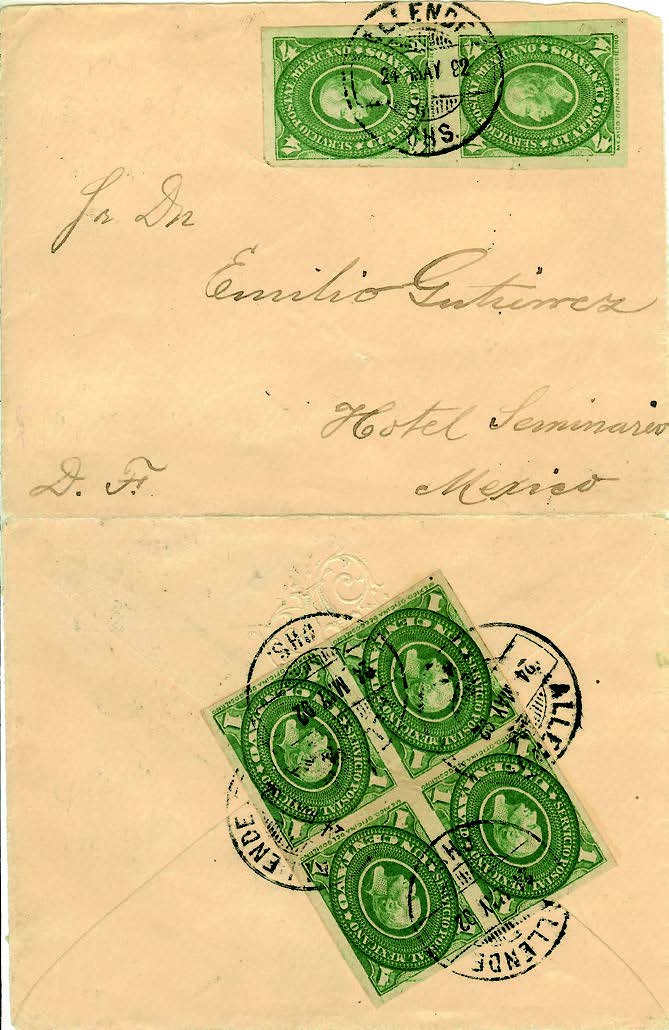
Most were perforated 12 x 12. However, and due to perforation errors, some stamps exist perforated 11 and 11½. The bad quality of the perforation machines created scarce perforation separation errors such as imperforate and imperforate-between varieties. All are rare. Imperforate multiples are known of the Green Issue (1c, 2c, 3c, 4c, 10c, 12c, 50c), $1 and $2 blue and the Changed Colors Issue (3c orange-brown). Some imperfs exist on cover and are rare (Figure 9). Imperforate singles are known of other values (Green: 5c, 6c, 20c; Changed Colors: 2c carmine, 5c ultramarine, 6c dark brown, 25c blue-green).
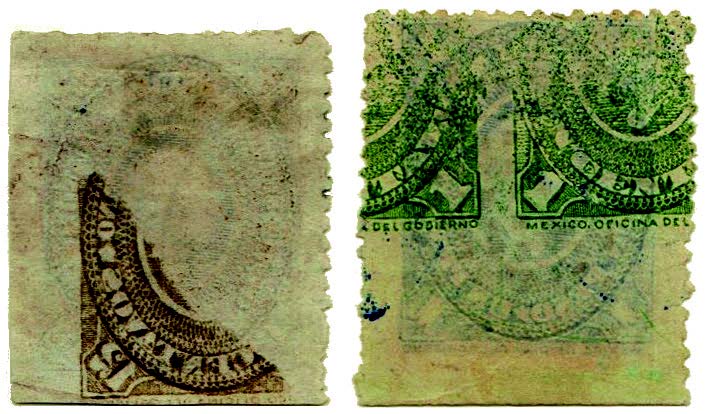
There are two stamps known printed on both sides: A $1 blue with a reverse impression of 1c green, and a 12c brown with a partial impression of the same. Both are believed to be unique (Figure 10).
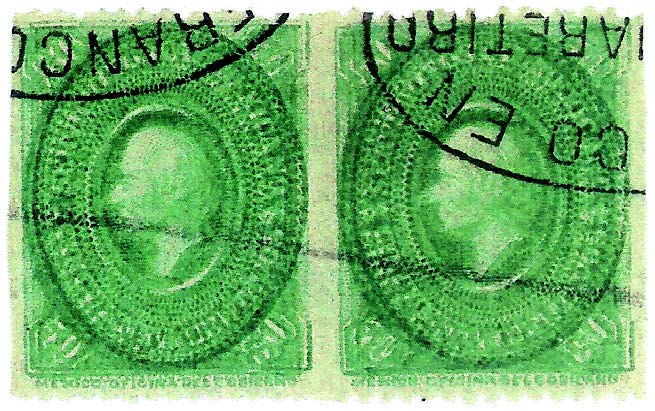
Dramatic double impressions exist in the 50c Green (Figure 11).
Except for the $5 and $10 blue-green of 1892 on watermarked paper, the issue is unwatermarked on wove or laid paper.
Error of Color
Discontinued District Overprints
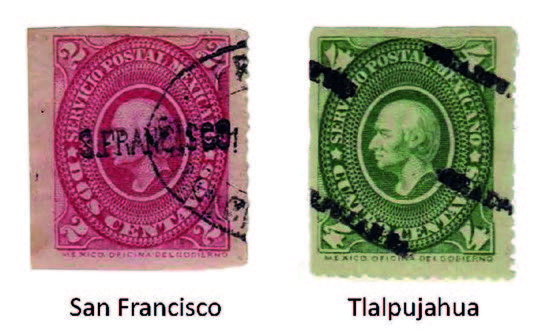
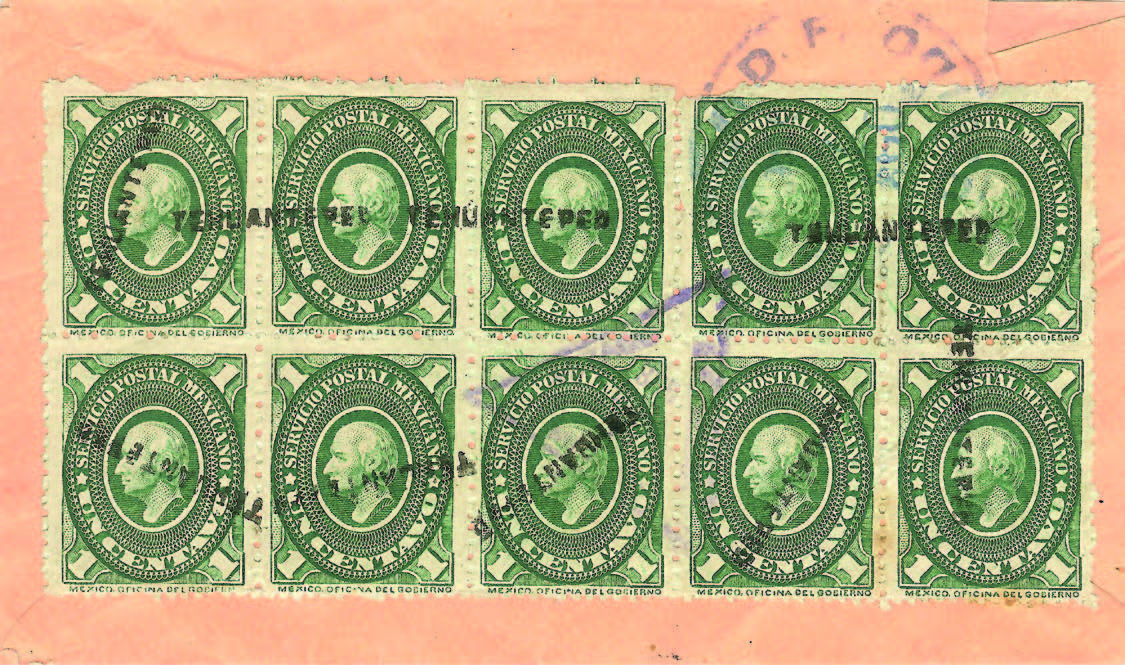
Seldom Used Denominations
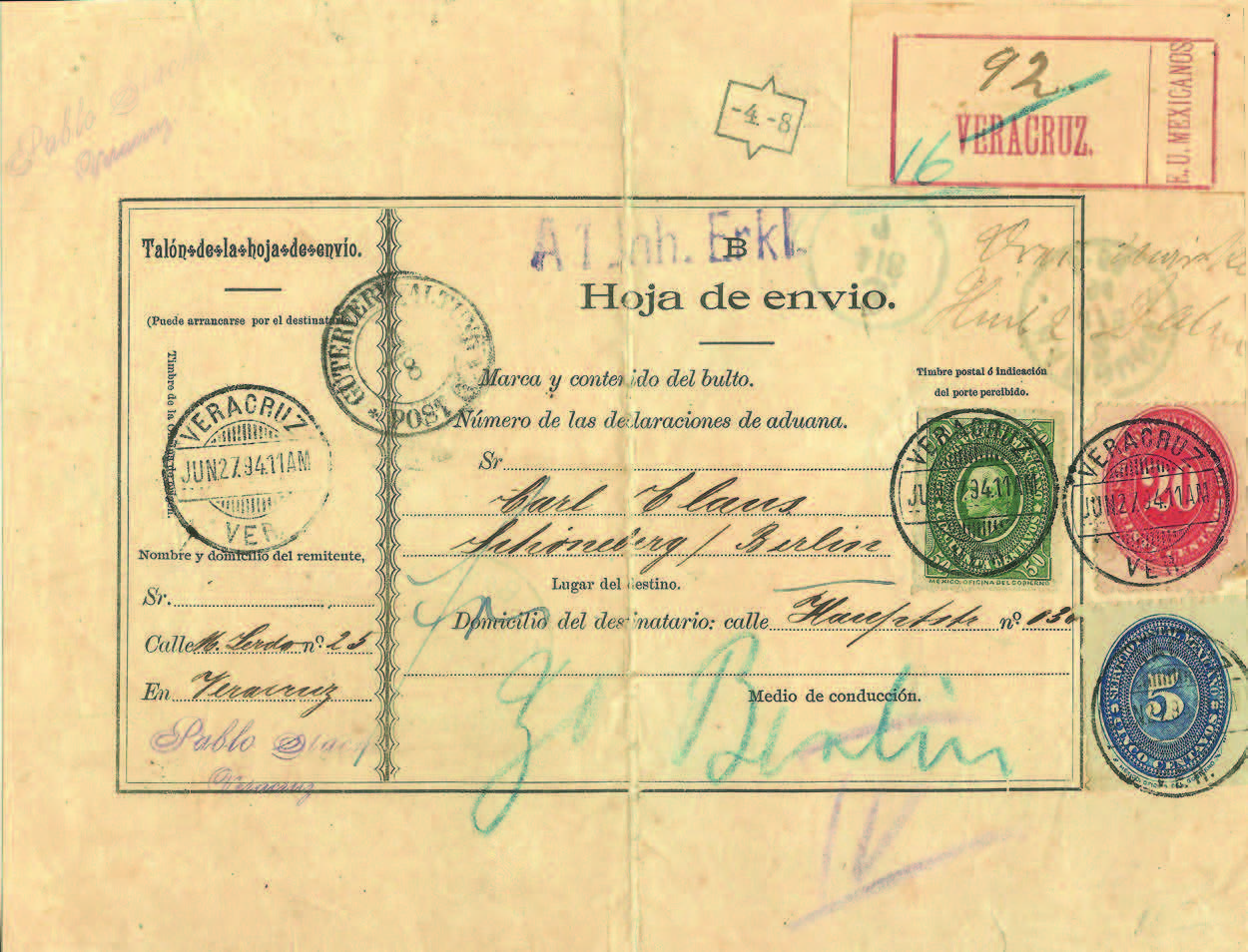
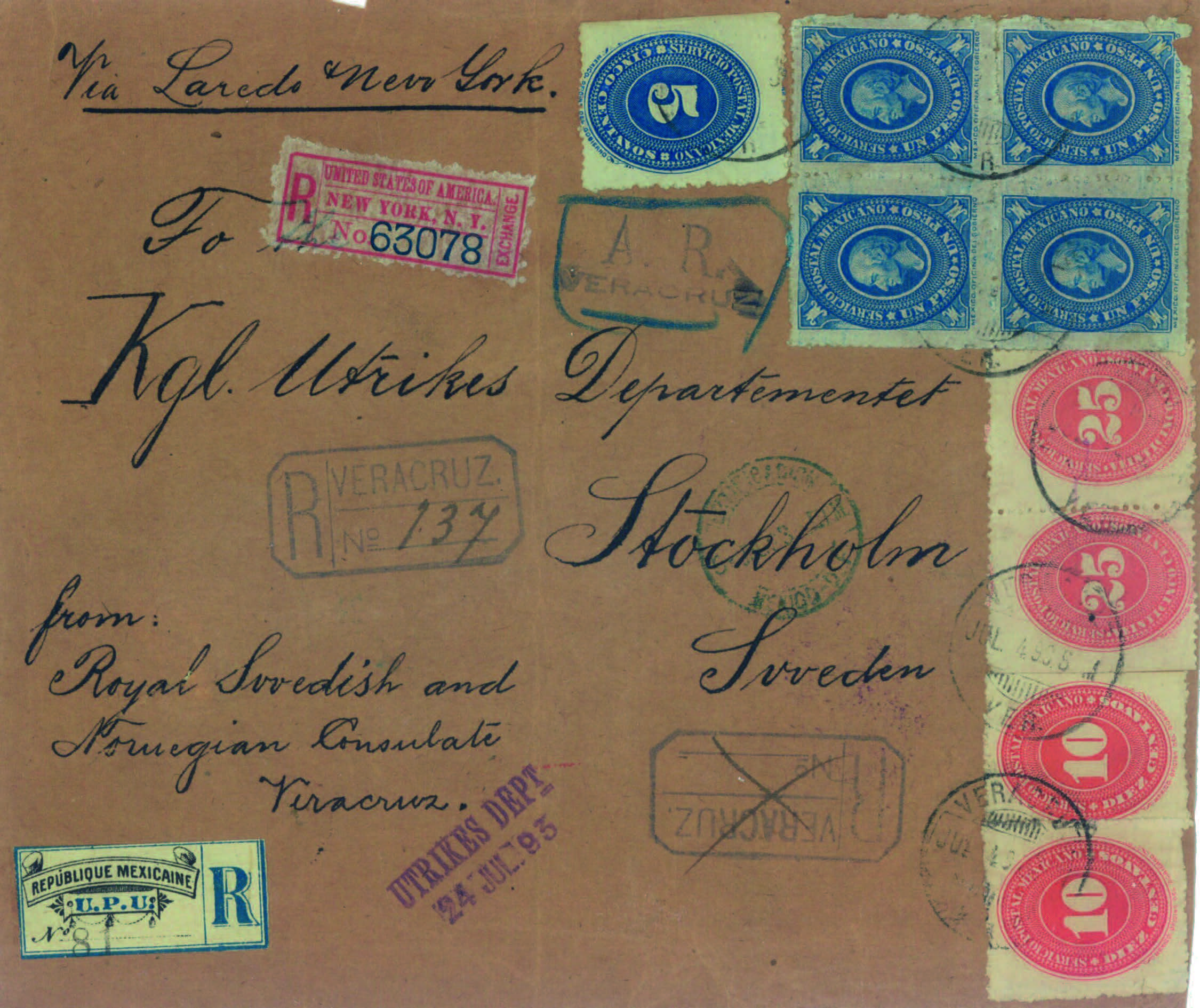
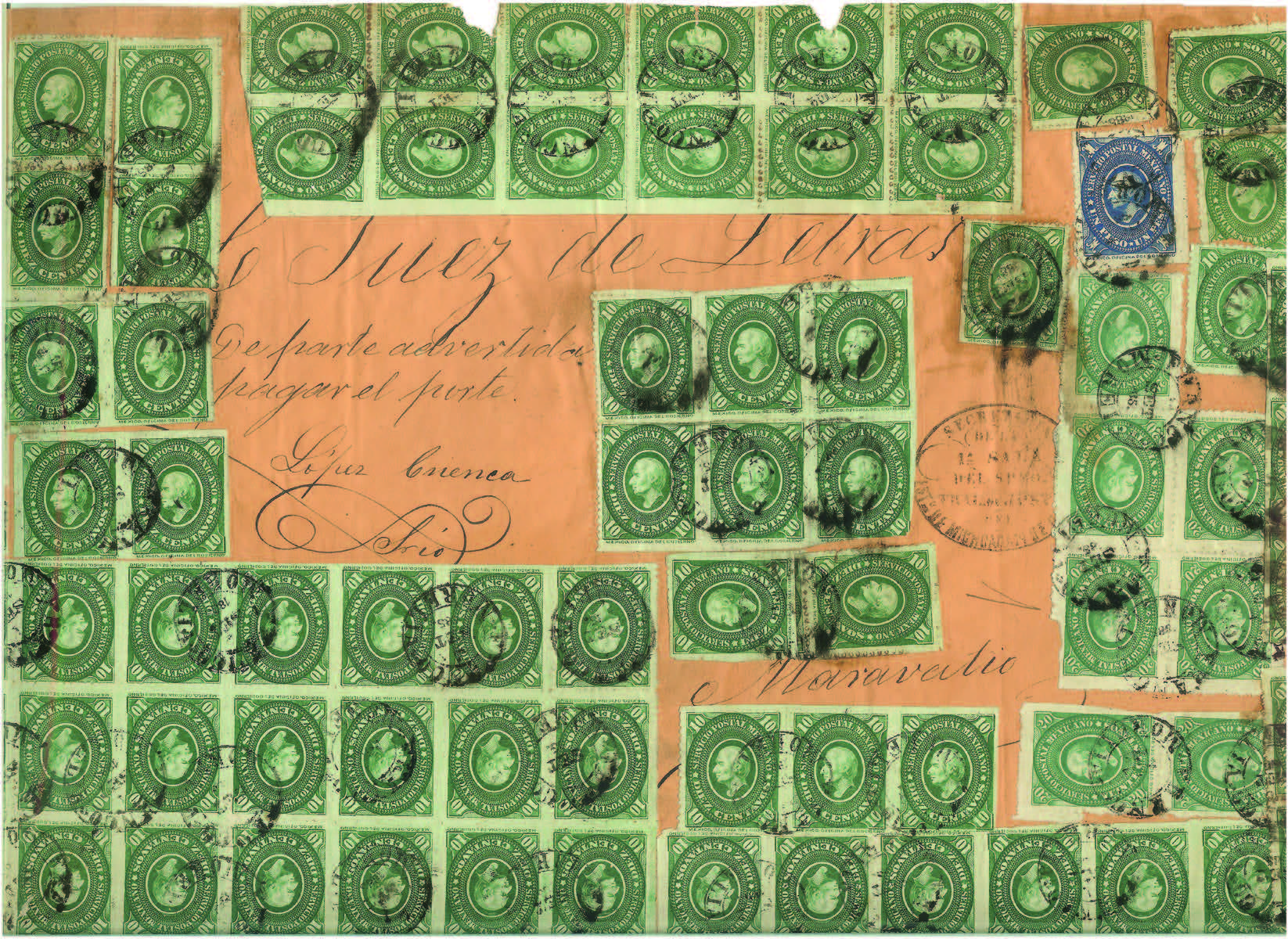
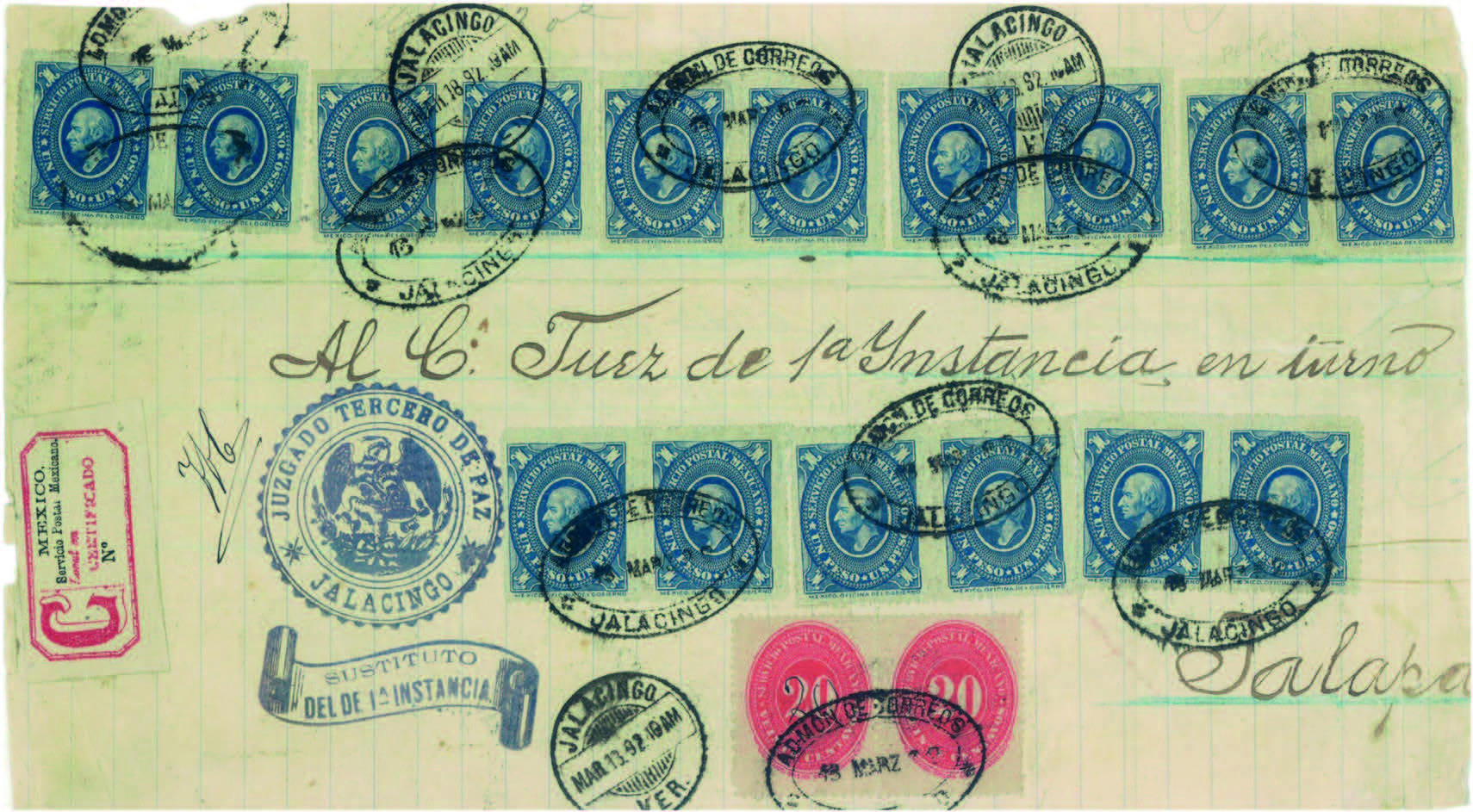
Three denominations were seldom used. They are plentiful unused and very scarce used on cover: Green 50c of which maybe less than 10 covers exist, the rarest being on a parcel receipt (Figure 15); $1 of which maybe 30-40 covers exist (Figures 16-18) and $2 of which only one front and one full cover exist, both non-philatelic (Figure 19).
Rates
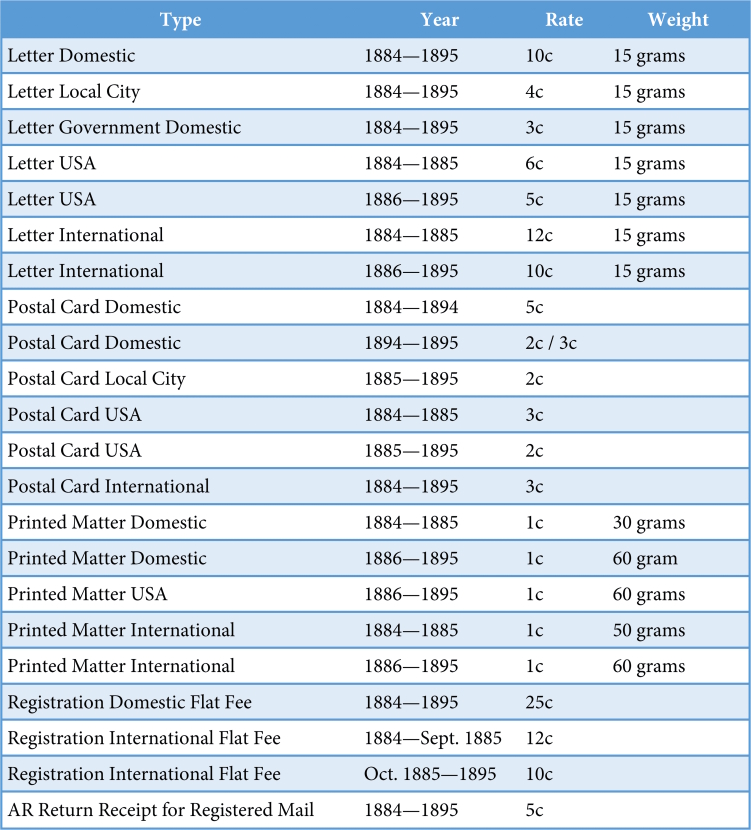
Table 1 shows the rate structure for the main services: First Class (letters, postal cards) and Third Class (printed matter). The other three mail class rates are not included: Second Class (periodicals in bulk), Fourth Class (non-commercial samples) and Fifth Class (parcels). Very few examples of those have survived and the rate structure for parcels is too complex for the scope of this article. The table ends in 1895 as the Hidalgo Medallions were demonetized in April.
The Jewels
Here is my personal list of jewels, the most rare and desirable items. They provide the thrill of the hunt for this issue. They are not listed in any particular order:
1) $10 blue-green. 100 issued, probably seven exist (Figure 4).
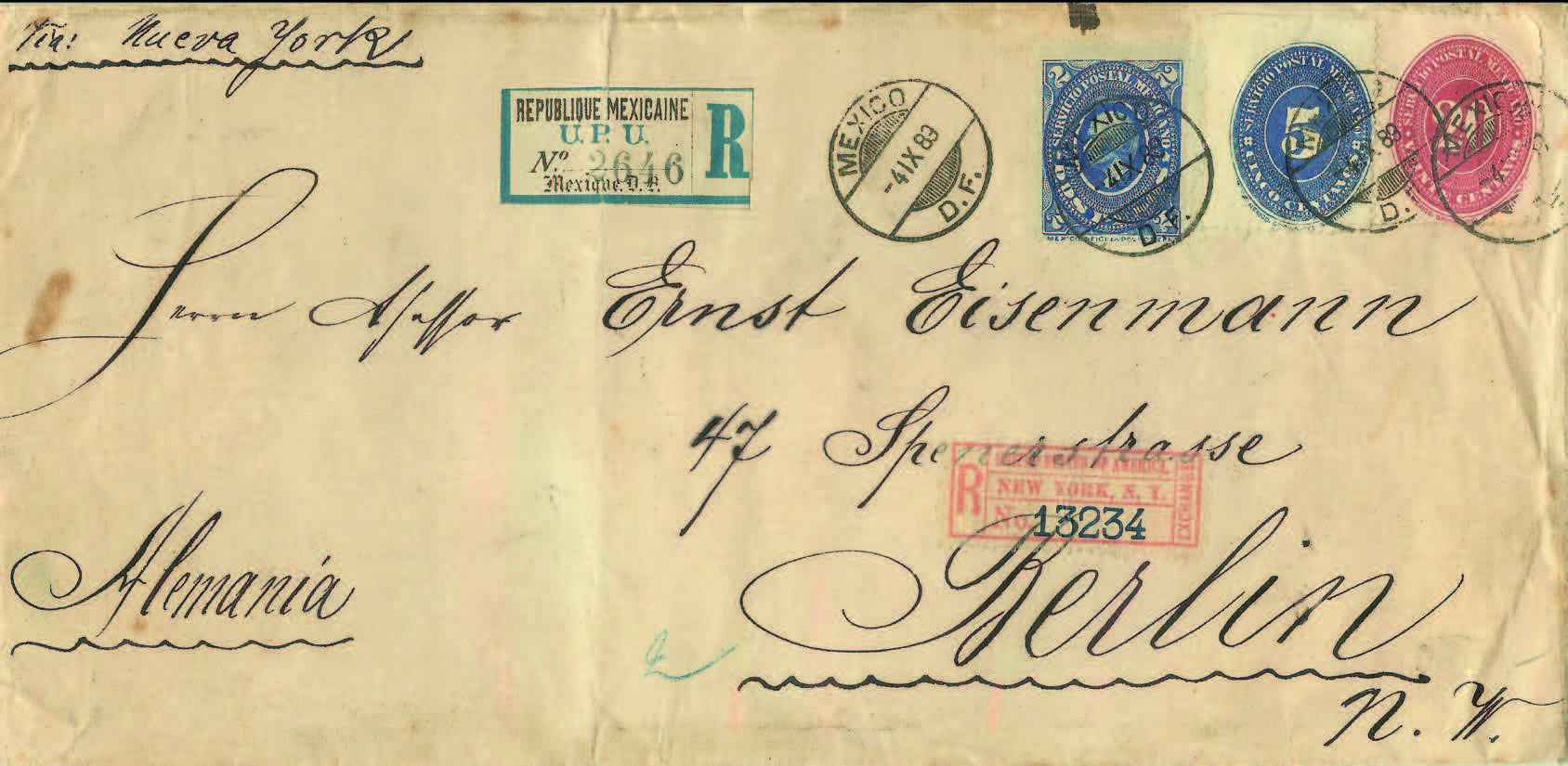
2) $5 and $10 blue and $5 blue-green on cover (Figure 5). They are all sent to the same address in New York. They are clearly philatelic but only one of each has been reported.
3) $2 blue on cover. Only one cover to Berlin and one domestic front are reported (Figure 19).
4) Any $1 or 50c on cover. These denominations were rarely used and are plentiful unused. The best is the $16.40 registered judicial front with 16 $1 stamps. This is the largest reported franking of the issue (Figure 18). The $1 block of four on a front to Sweden is also unique (Figure 16).
5) AR registered covers. (Figures 7 and 16), particularly AR return receipts with the 5c paid with stamps and attached to the back. Two of these are known (Figure 20).
6) Solo usages on cover of the 2c, 3c, 4c, 6c, 12c, and 50c values. These make very uncommon rates and they all exist.
7) Non-philatelic combination covers with Large Numerals (Figures 6, 7, 15-19 and 21). The registered 1887 Mazatlán cover is probably the most attractive of the issue and is not philatelic (Figure 21).

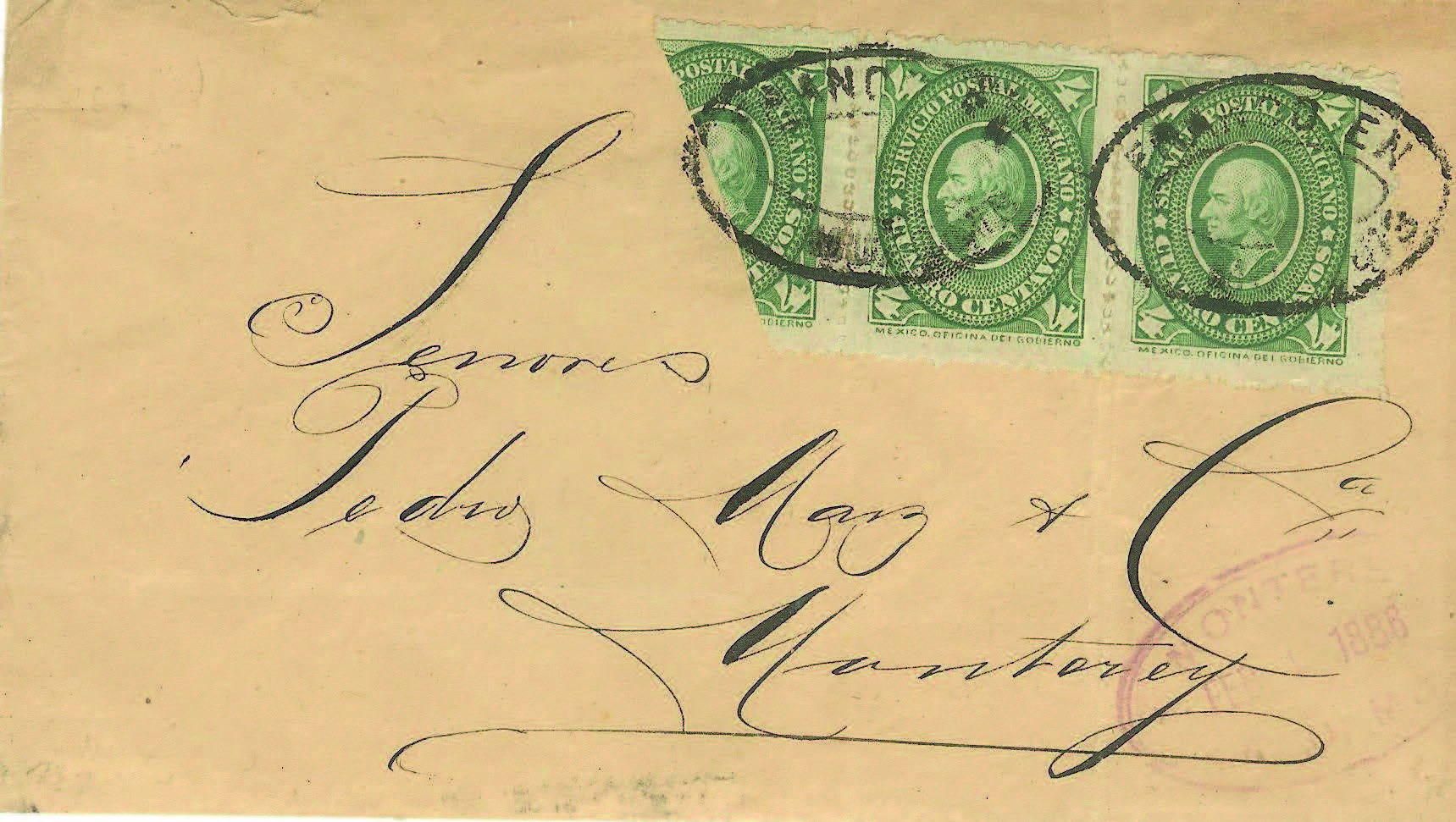
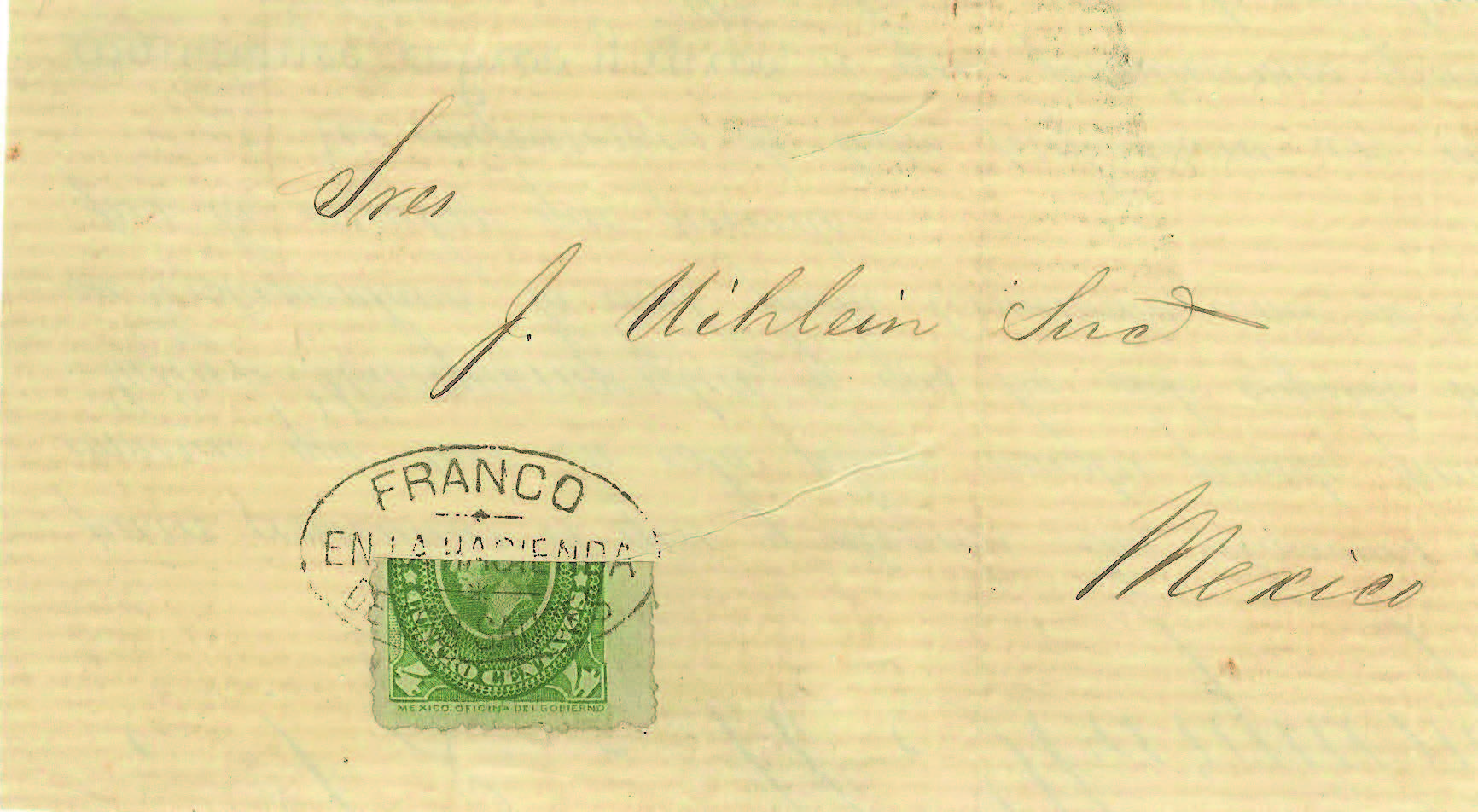
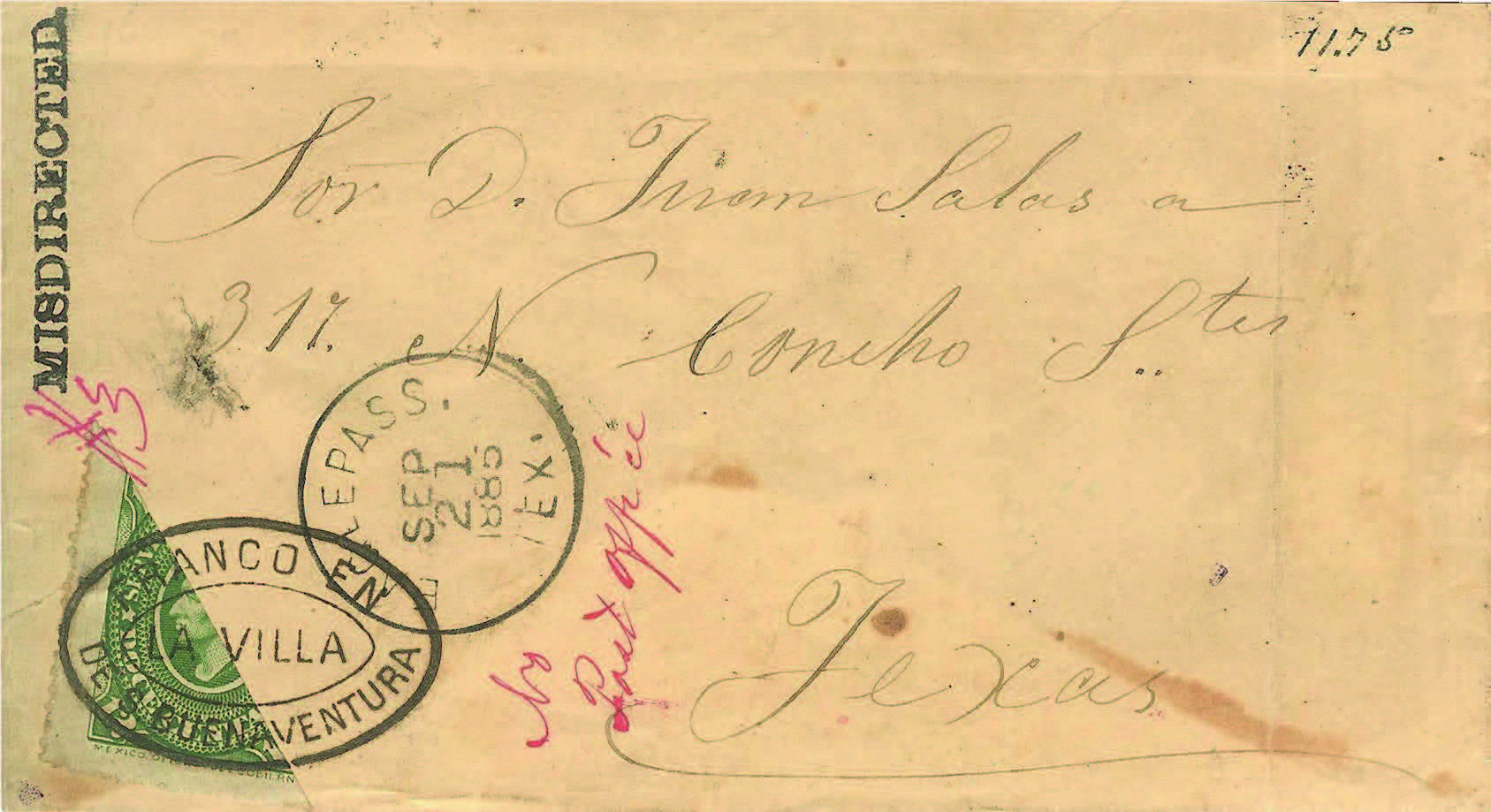
8) Non-philatelic bisects on cover. Although splits were illegal, some genuine bisect usages exist: Green 4c (known on 3 covers/fronts), 12c (known on a front), 20c (known on at least 3 covers). Changed Colors: 2c carmine (known on 2 covers) 4c orange (known on cover)(Figures 22-24),
9) Local city covers with 4c rate (Figure 25).
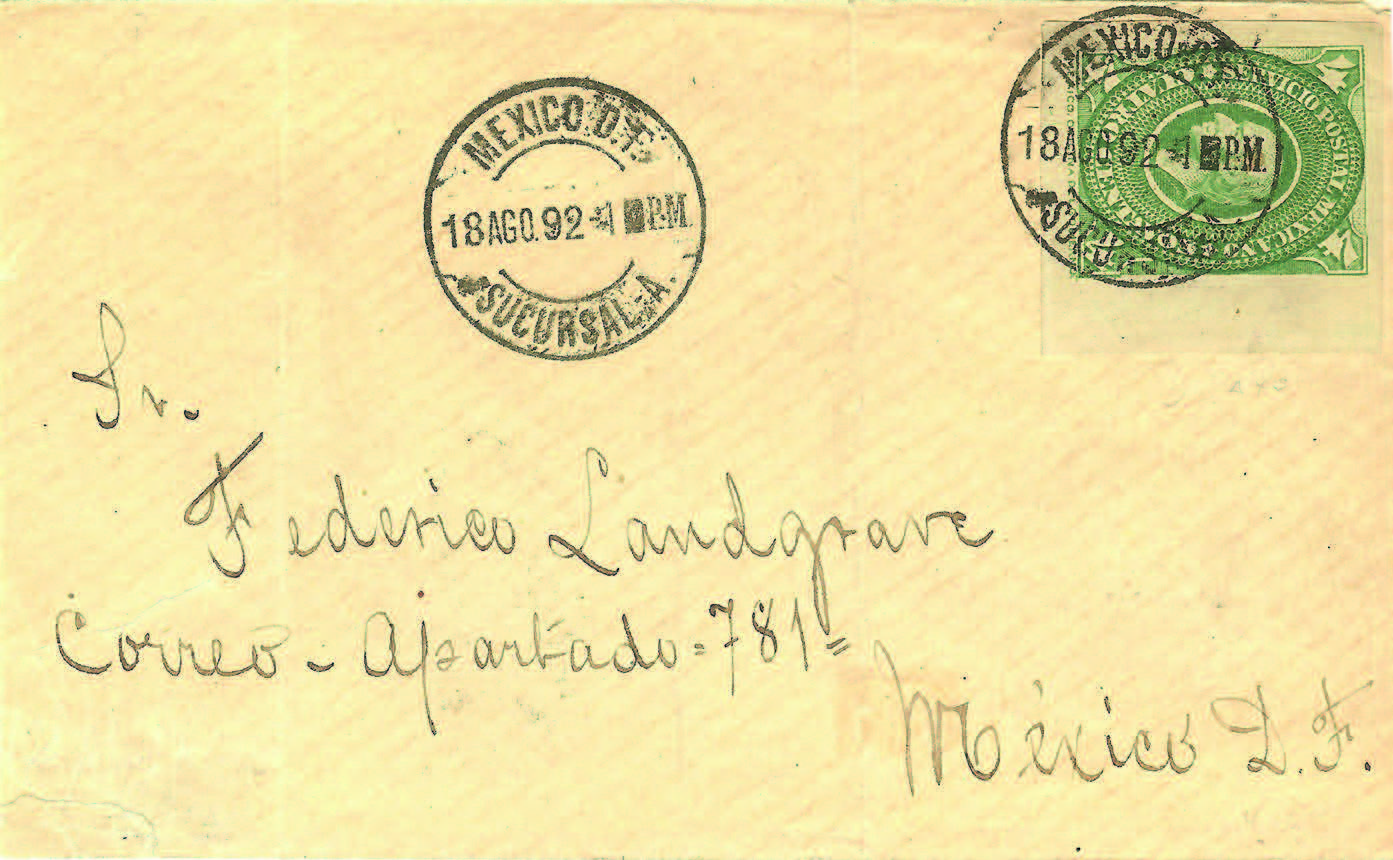
10) 1884-1885 covers with the scarce 6c rate to USA (Figure 24) or 12c international rate (Figure 2). These higher rates were in place briefly during a brief transition period after joining UPU.
11) Stamps with partial or whole printing in the back: $1 with 1c Green on back, 12c olive-brown with partial printing of same on back (Figure 10).
12) Covers or stamps with district overprints. I have only seen two covers, the block of 10 1c overprint Tehuantepec (Figure 14) and a cover with a 10c overprint Chiapas.
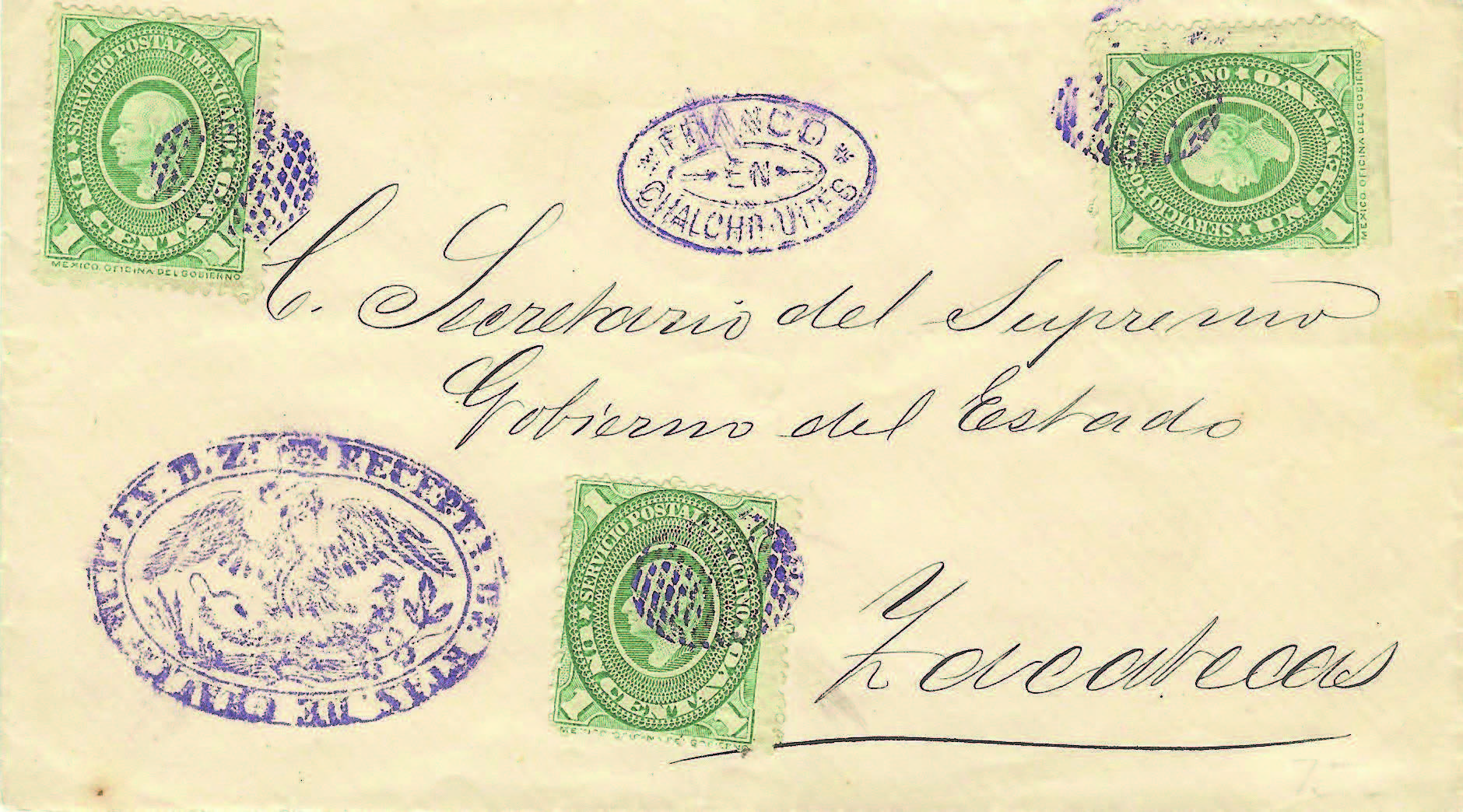
13) Covers with the 3c government special discounted rate. The most colorful is the famous Chalchihuites cover (Figure 26).
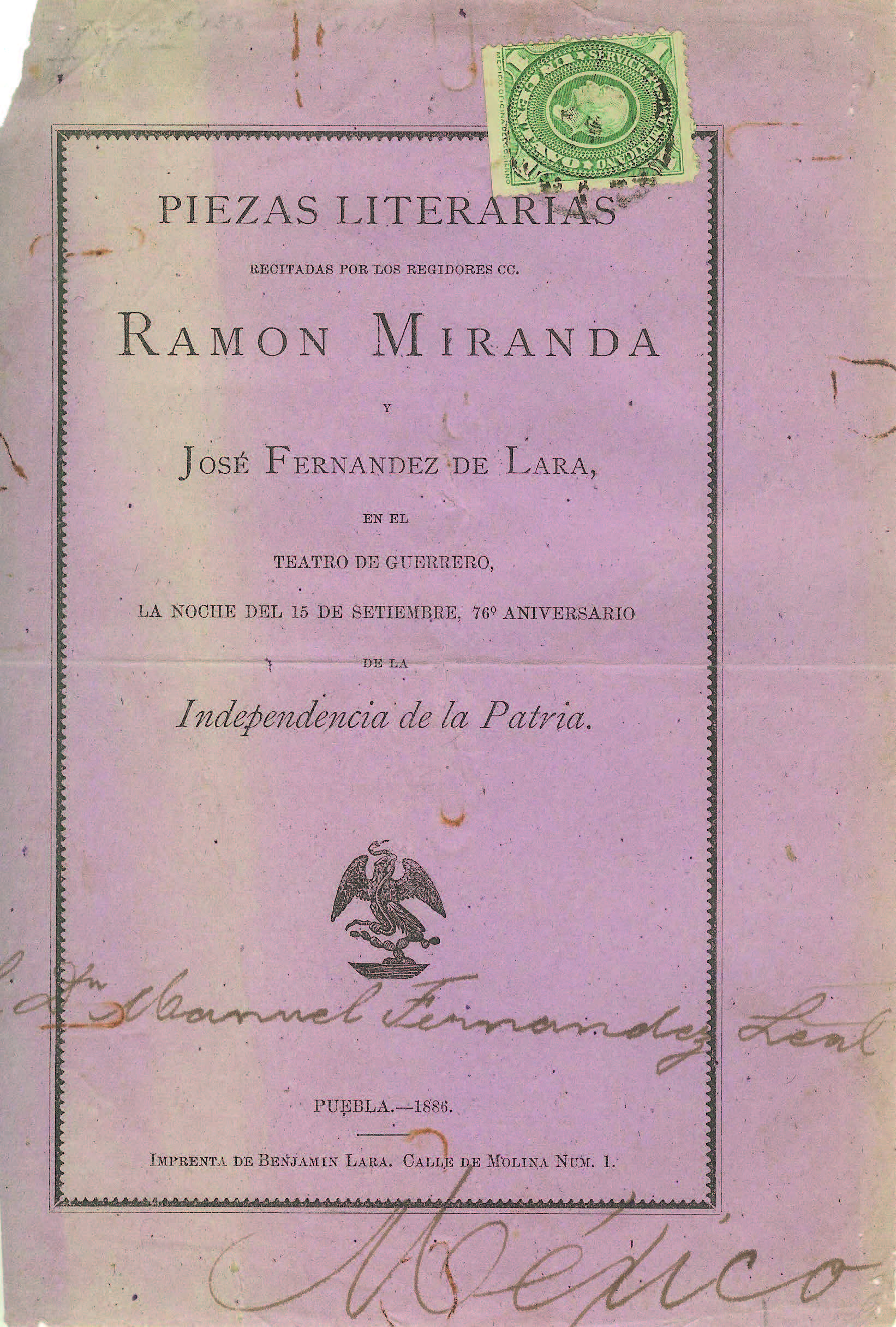
14) Printed Matter rates. The most spectacular is the tissue paper leaflet for a play sent with the Changed Colors 1c pale green stamp (Figure 27). It is unbelievable that this fragile piece of mail survived the transit to its destination.
15) Multiple franking non-philatelic covers. The best one is the front of a large judiciary wrapper with a franking of $9.40. It has 77 stamps: 68 ten cents, seven twenty cents, one fifty cents and one one peso (Figure 17).
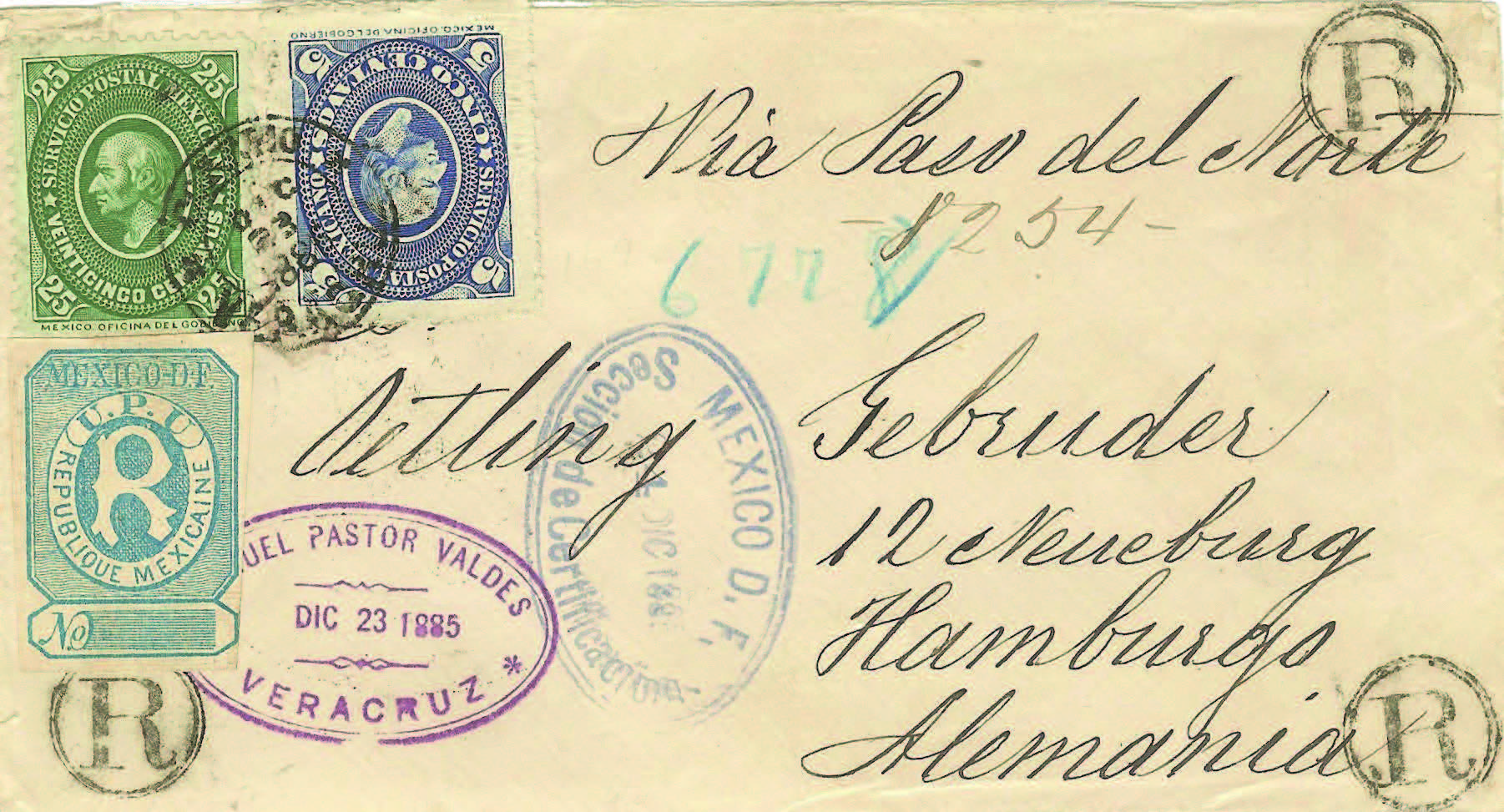
16) Early registered covers with the blue “R” and red “C” labels before the use of the UPU standard labels. They are scarce and were used mainly in 1884 and 1885. The R meant REGISTRADO and the C CERTIFICADO. It seems that R was intended to be used for foreign mail while C for domestic. However, this rule was not consistently followed (Figures 28 and 29).
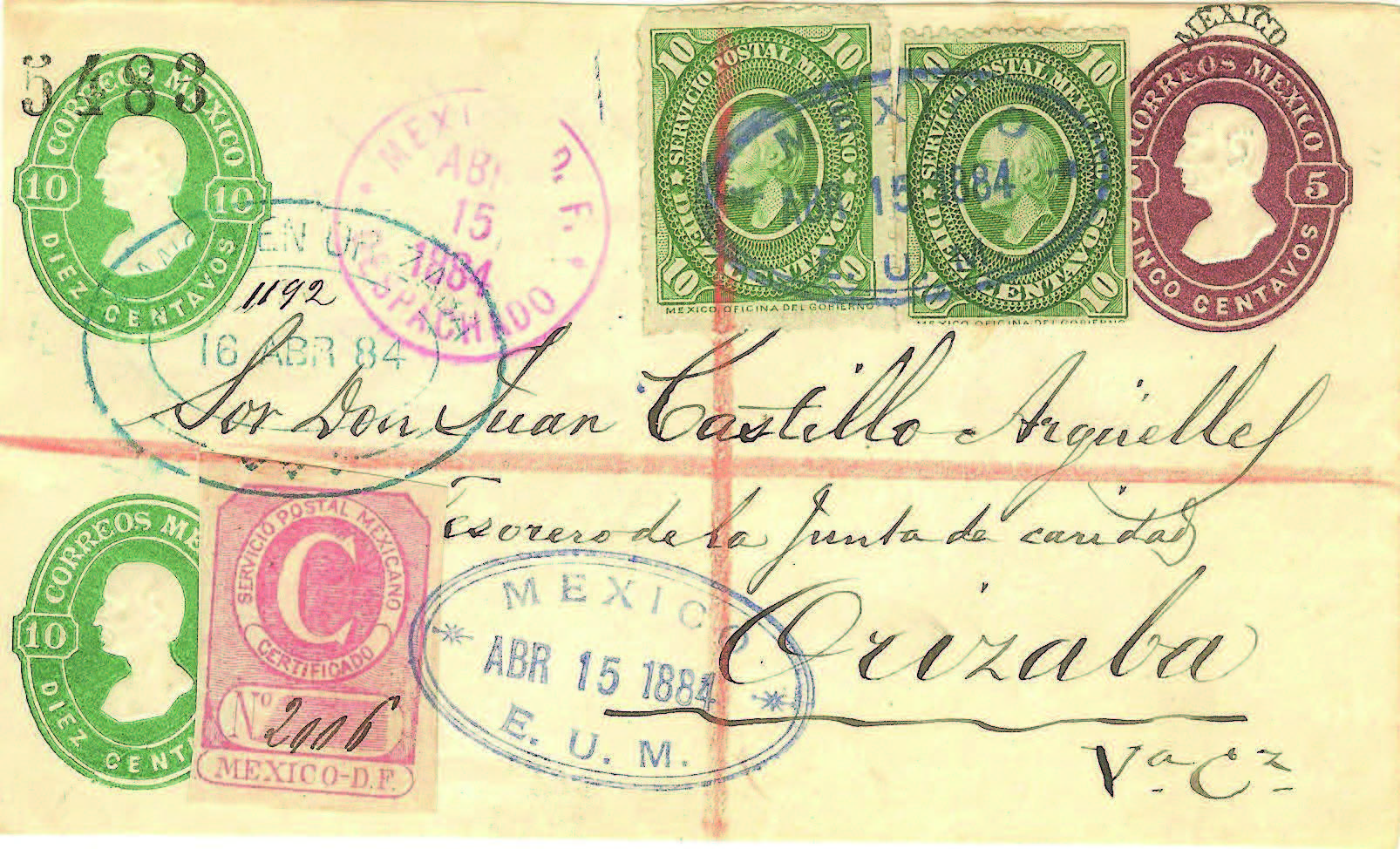
17) Parcel forms with stamps on them paying the franking. Less than a handful are known, probably because they were destroyed after the package had been received (Figure 15).
18) Cancelations from small towns or spectacular cancels on cover (Figure 21). By this time many towns were using standardized cancel designs so creative cancelations are scarce.
First Officials
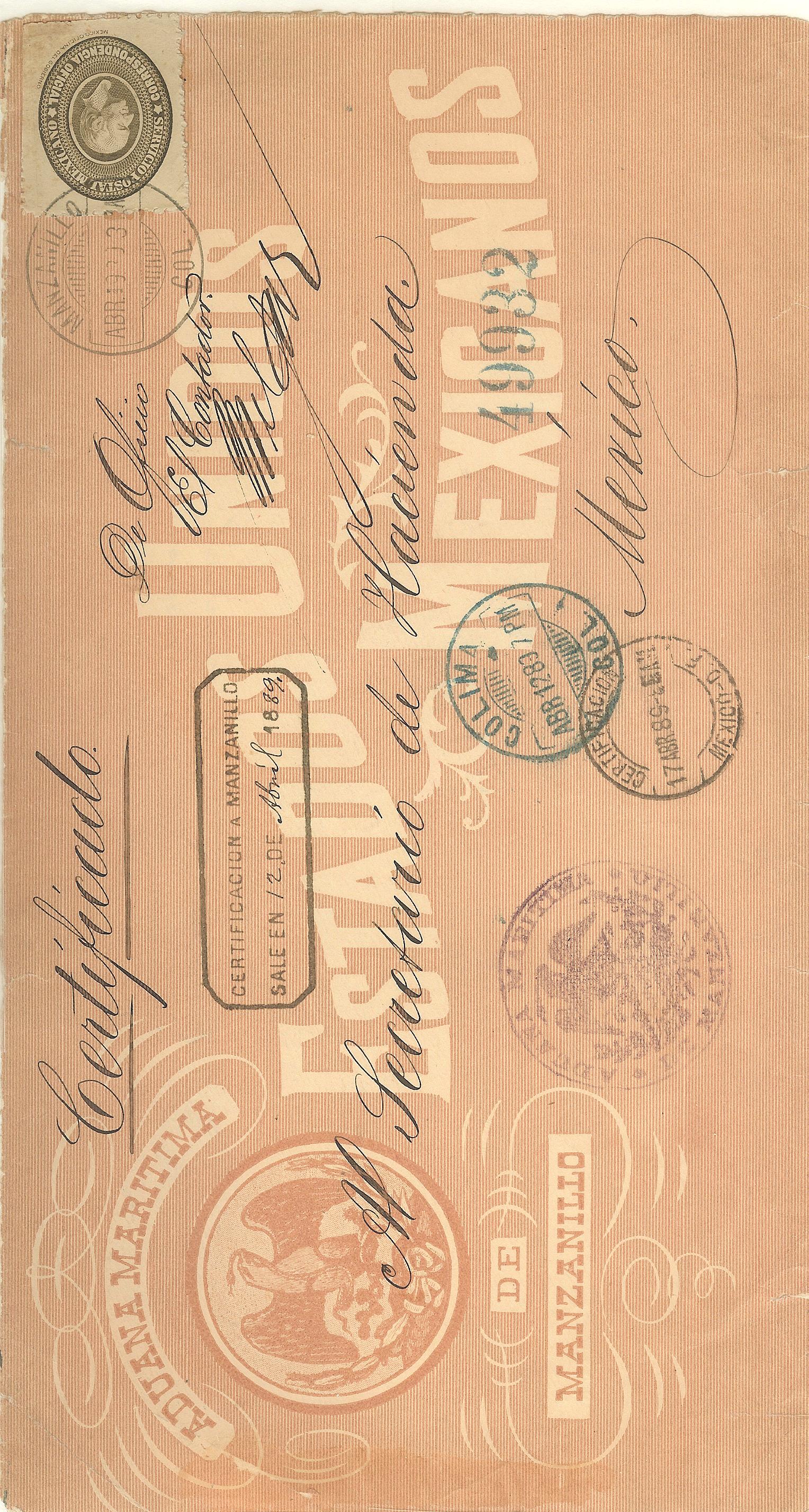
Although not the focus of this article, it should be mentioned that the first official stamps issued in Mexico were Medallions. The design is very similar to the regular stamps but they have no denomination. The stamps were for free franking from certain government entities so they are always used solo on cover (Figure 30). The colors changed from time to time: bright red (1884-1888), scarlet (1885-1887), olive brown (1887-1893), blue-green (1893-1894), orange (1888-1891) and ultramarine (1894-1895). The earliest cover is dated July 21,1884, and the latest June 14, 1894. See the article by Rodriguez (2019) for more information about the Official Hidalgo issues.
I want to thank the late Jay Bard a veteran MEPSI member from Chicago. The review of his collection of 60 years of incessant buying and sorting this issue gave me great pleasure and insights about what was rare. In all those years, for example, he never owned a $2 on cover. Also, I want to thank my colleagues Marc Gonzales and Michael S. Hart who gave me feedback on the draft and John Kordich, who shared with me the cover with the Chiapas overprint.
References
Daffner, Richard (1990). "The 1884 Hidalgo Medallion Issue," Mexicana (MEPSI), Vol. 39, No. 1 p. 34.
Follansbee, Nicholas (2015). A Catalogue of the Stamps of Mexico 1856-1910, N. Follansbee, Oregon.
John, Carl LeMar, (1987). "The 5 and 10 pesos of 1892," Mexicana (MEPSI), Vol. 36 No. 3 p. 145.
Rodriguez, Omar J. (2009). "First Officials—Hidalgo Medallions 1884-1895. Six Findings from Covers." Mexicana (MEPSI). April 2019, Vol 68, No.2, 97-105.
Federacion Mexicana de Filatelia (2006). Tres Siglos de Filatelia en Méjico (Three Centuries of Philately in Mexico). AMEXFIL Mexico City.

 Facebook